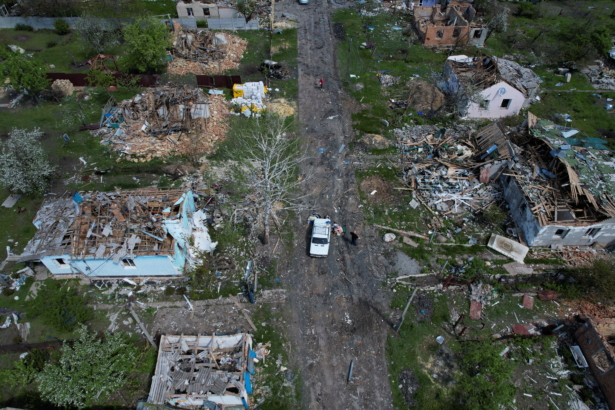

Ukrainian President Volodymyr Zelensky has accused Moscow of rejecting his proposal for a holiday ceasefire and instead choosing what he called an “Easter escalation.” His remarks followed another large-scale Russian drone and missile attack that killed six civilians and injured forty others across Ukraine.
The strikes, which included rare daytime barrages, destroyed homes in the Zhytomyr region, ignited fires in Kyiv after a drone slammed into a block of flats, and left Kharkiv reeling from what its mayor described as one of the city’s biggest assaults so far. Zelensky said Russia’s intensified attacks were a direct response to his call for a temporary truce during Orthodox Easter, celebrated next weekend in both Ukraine and Russia. “The Russians have only intensified their strikes, turning what should have been silence in the skies into an Easter escalation,” he wrote on X.
Despite the air raids, Zelensky agreed with British intelligence assessments that the situation on the eastern frontline is the most favorable for Ukraine in ten months. Russian advances appear to have slowed, and Zelensky described the battlefield as “stable,” with small gains and losses but no major breakthroughs. Ukraine has also launched deep strikes of its own, hitting energy facilities on Russia’s northern coast, including repeated drone attacks on the port of Ust-Luga that forced Moscow to suspend exports. Kyiv reported additional strikes on an industrial plant in Togliatti and a substation in Taganrog, with Russian officials confirming damage and injuries.
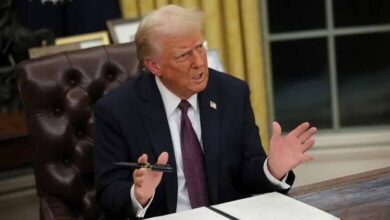
Diplomatic efforts to end the war remain stalled. Zelensky said his offer of a holiday truce is still on the table and has been conveyed to US envoys Steve Witkoff and Jared Kushner. Plans for further talks mediated by Washington have been postponed twice, with Moscow saying negotiations are “on hold.” Zelensky invited Trump’s team to visit Kyiv and then travel to Moscow to keep the peace process alive, though doubts persist over Russia’s willingness to engage.
The wider global context complicates Ukraine’s position. The war in Iran has disrupted fuel supplies and driven up prices, raising concerns about shortages for Ukrainian frontline troops who rely heavily on diesel. Russia, by contrast, benefits from higher energy revenues that help fund its military operations. Zelensky also warned that Ukraine may face a shortage of US defensive missiles, as many Patriot systems are now deployed in the Middle East. “The longer the war in the Middle East continues, the greater the risk that we will receive less weaponry,” he told journalists, calling the situation “extremely difficult.”
For now, Ukraine’s strategy appears focused on holding the line rather than launching major offensives. Zelensky emphasized that while the threat of a Russian breakthrough has receded, the relentless air raids continue to test the resilience of civilians and soldiers alike. His accusation of “Easter escalation” underscores the symbolic weight of the moment, as Ukrainians brace for more attacks during what should be a season of peace.