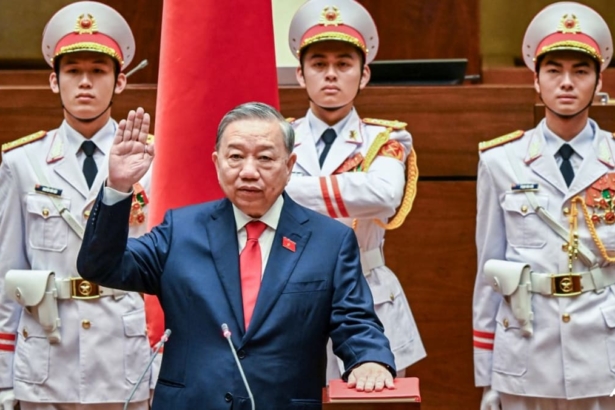

Vietnam has entered a new era of political leadership as Communist Party General Secretary To Lam was unanimously elected as the country’s state president on Tuesday, consolidating unprecedented authority in one leader. The 68-year-old veteran, who also secured a second term as party chief in January, now holds dual leadership roles, a move analysts say signals a China-style mandate and a break from Vietnam’s traditional collective leadership system.
During a session of the National Assembly in Hanoi, all 495 deputies present endorsed Lam’s nomination, while five were absent. Officials had finalized nominations for the top leadership positions in March, setting the stage for what many observers describe as a historic consolidation of power. With Lam at the helm as both general secretary and president, the country could see faster decision-making, though analysts caution that this comes with the risk of increased authoritarianism.
In a televised address after the vote, Lam pledged a “new growth model with science, technology, innovation, and digital transformation as the primary driving forces.” He emphasized self-reliance in defense, stability, and improving “all aspects of people’s lives.” His economic vision aims to transition Vietnam from a low-cost manufacturing hub into a more diversified, high-tech economy, targeting rapid, sustainable growth while continuing to attract foreign investment.
Lam’s dual role has drawn both praise and concern. Experts like Le Hong Hiep of the ISEAS Yusof Ishak Institute warn that concentrating power in one individual may heighten authoritarian tendencies. At the same time, analysts note that it could allow the Vietnamese government to formulate and implement policies more efficiently. Alexander Vuving from the Asia-Pacific Centre for Security Studies observes that Lam’s rise marks a “new normal,” fundamentally shifting assumptions about Vietnam’s domestic politics.
Lam previously held both positions briefly after the death of former party chief Nguyen Phu Trong in 2024 and maintained a commanding presence even after relinquishing the presidency. He is known for pragmatic economic reforms, balancing support for state-owned enterprises with encouragement of private conglomerates, aiming to boost competitiveness without alienating traditionalists.
On foreign policy, Lam has maintained Vietnam’s careful “Bamboo Diplomacy,” navigating ties with major powers while expanding international partnerships. Experts suggest his dual role is unlikely to change Vietnam’s foreign policy approach, though it does underscore a growing concentration of decision-making authority in a single leader.
As parliament prepares to elect a new prime minister to replace Pham Minh Chinh, Vietnam stands at a crossroads. Lam’s consolidated mandate offers both the promise of swift reforms and the cautionary specter of concentrated power. For investors, policymakers, and ordinary citizens alike, the next five years will be a critical period in shaping the nation’s political and economic trajectory.
In short, To Lam’s dual leadership is a defining moment for Vietnam—melding authority with ambition, stability with rapid modernization, and domestic policy with global engagement, marking a new chapter in the country’s evolving story.