
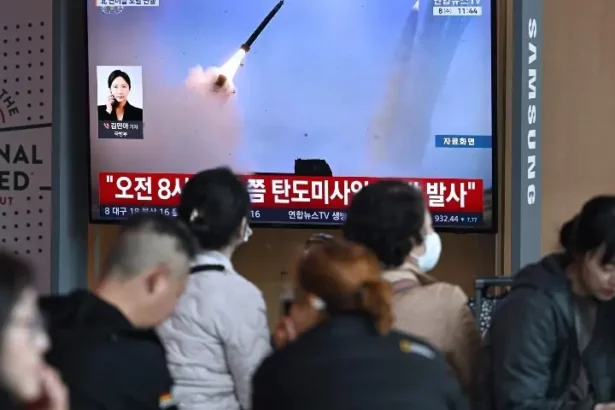

North Korea has conducted multiple ballistic missile launches in two separate rounds, according to South Korea’s military, escalating tensions on the Korean Peninsula.
The South Korean military reported that an unidentified projectile was first detected from the Pyongyang area on Tuesday. This was followed by the launch of multiple short-range ballistic missiles on Wednesday morning from the Wonsan region toward the East Sea. At least one additional missile was also fired later in the day.
Officials said the missiles traveled approximately 240 kilometers and described the launches as part of North Korea’s continued weapons testing activity this year. These latest launches mark the fourth and fifth ballistic missile tests by Pyongyang in 2026, signaling a continued pattern of military demonstrations.
South Korea has placed its forces on heightened alert and strengthened surveillance in response to the launches. The military said it remains in a full state of readiness to counter any further provocations.
Authorities in Japan also issued warnings after detecting what they suspected to be a ballistic missile launch, urging vessels in nearby waters to remain cautious.
In Seoul, the presidential office held an emergency security meeting and called on North Korea to immediately halt such actions, describing them as provocative and in violation of United Nations Security Council resolutions. Officials also stressed the need to maintain heightened vigilance, especially amid broader global instability.
The United States Indo-Pacific Command stated that the launches do not pose an immediate threat to U.S. personnel, territory, or allies, while confirming close coordination with regional partners.
Analysts believe the missile launches reflect North Korea’s rejection of South Korea’s recent attempts to improve relations. Despite Seoul’s diplomatic overtures and expressions of regret over past incidents involving drone incursions, Pyongyang has continued to adopt a firm and confrontational stance.
North Korean officials, including Kim Jong Un’s sister, have made mixed statements in recent days—initially describing Seoul’s response as “wise,” but later reiterating a hardline position by labeling South Korea as a hostile state. Observers say this dual messaging reflects internal signaling while maintaining a tough external posture.