


WASHINGTON: Since its launch, the James Webb Space Telescope has identified early galaxies that shine unexpectedly brightly, suggesting rapid maturity and challenging current cosmological models.
The James Webb Space Telescope (JWST), the largest and most advanced space telescope ever constructed, has been making remarkable discoveries since its launch in December 2021. Among its achievements is the identification of the earliest and most distant galaxies known, which formed just 300 million years after the Big Bang.
When we observe distant objects in space, we are also looking far back in time. This is because the light from these objects takes billions of years to reach our telescopes. Through the JWST, astronomers have detected several of these ancient galaxies, providing us a glimpse of the universe as it appeared shortly after its inception.
Surprising Brightness of Early Galaxies
The data collected by the JWST aligns well with existing theories of cosmology—the study of the universe’s origin and evolution—and galaxy formation. However, these observations have also brought some surprises. Notably, many of these early galaxies are much brighter than expected, challenging previous assumptions about galaxy brightness and activity shortly after the Big Bang.
Brighter galaxies are thought to have more stars and more mass. It was thought that much more time was needed for this level of star formation to take place. These galaxies also have actively growing black holes at their centers – a sign that these objects matured quickly after the Big Bang. So how can we explain these surprising findings? Do they break our ideas of cosmology or require a change to the age of the universe?
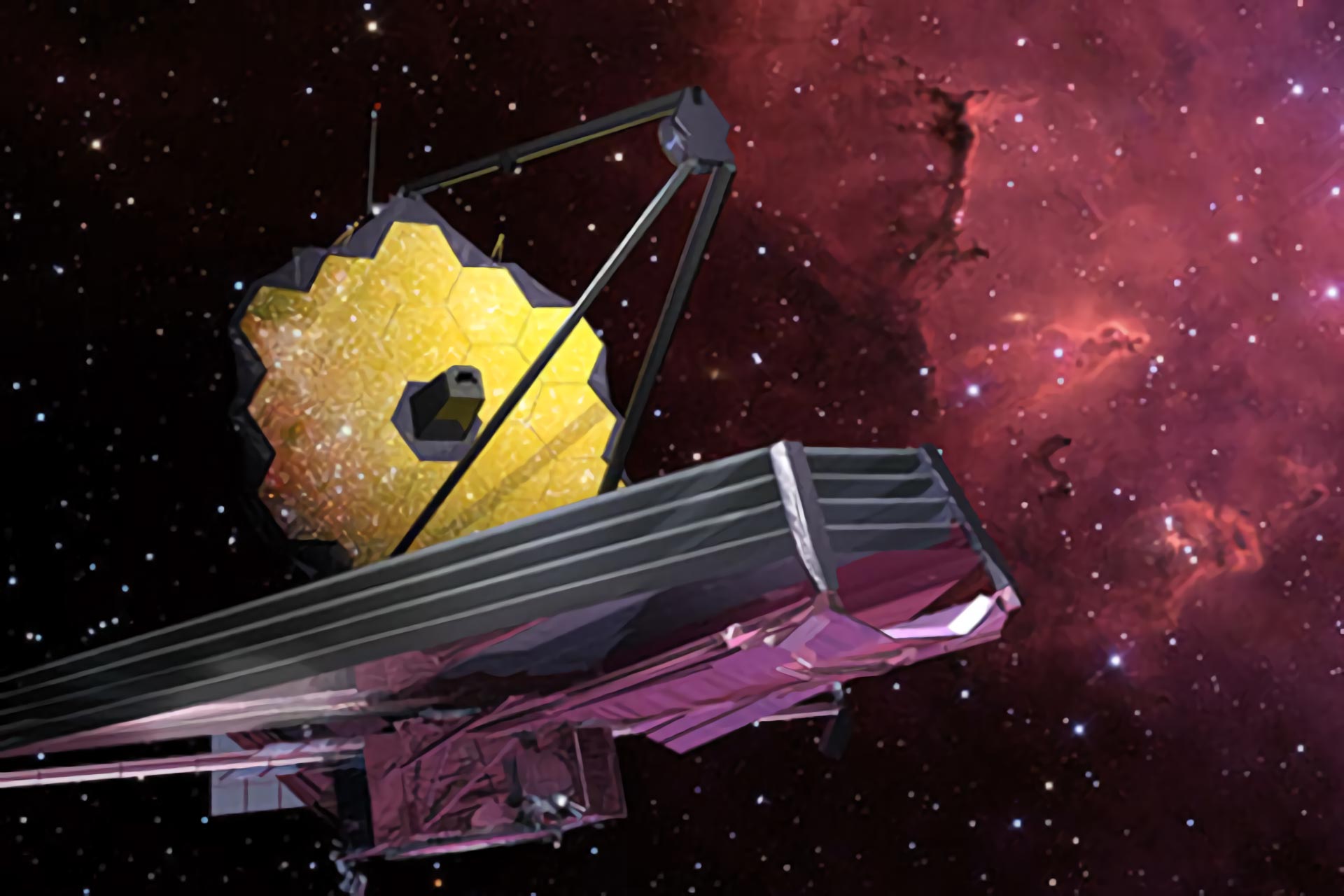
Scientists have been able to study these early galaxies by combining JWST’s detailed images with its powerful capabilities for spectroscopy. Spectroscopy is a method for interpreting the electromagnetic radiation that’s emitted or absorbed by objects in space. This in turn can tell you about the properties of an object.
Our understanding of cosmology and galaxy formation rests on a few fundamental ideas. One of these is the cosmological principle, which states that, on a large scale, the universe is homogeneous (the same everywhere) and isotropic (the same in all directions). Combined with Einstein’s theory of general relativity, this principle allows us to connect the evolution of the universe – how it expands or contracts – to its energy and mass content.
The standard cosmological model, known as the “Hot Big Bang” theory, includes three main components, or ingredients. One is the ordinary matter that we can see with our eyes in galaxies, stars and planets. A second ingredient is cold dark matter (CDM), slow-moving matter particles that do not emit, absorb or reflect light.
The third component is what’s known the cosmological constant (Λ, or lambda). This is linked to something called dark energy and is a way of explaining the fact that the expansion of the universe is accelerating. Together, these components form what is called the ΛCDM model of cosmology.
The Mystery of Dark Energy and Dark Matter
Dark energy makes up about 68% of the total energy content of today’s universe.
Despite not being directly observable with scientific instruments, dark matter is thought to make up most of the matter in the cosmos and comprises about 27% of the universe’s total mass and energy content.
While dark matter and dark energy remain mysterious, the ΛCDM model of cosmology is supported by a wide range of detailed observations. These include the measurement of the universe’s expansion, the cosmic microwave background, or CMB (the “afterglow” of the Big Bang) and the development of galaxies and their large-scale distribution – for example, the way that galaxies cluster together.