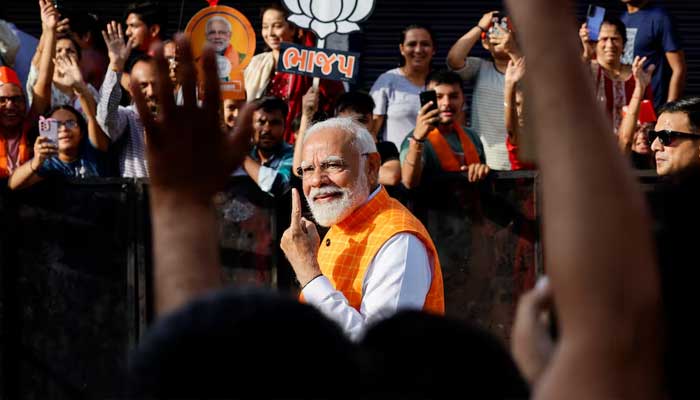

NEW DELHI: Prime Minister Narendra Modi’s Bharatiya Janata Party (BJP) on Tuesday tabled a parliamentary bill seeking to synchronise state and national elections.
The proposed legislation, if it comes into effect, would vastly extend what is already the world’s largest democratic exercise.
Ruling BJP has said that the concurrent polls proposed by the “One Nation, One Election” bill would cut costs, but opposition parties condemned the move as a bid to bolster power.
Phased voting in general elections for the national parliament this year — when Modi won a third term — stretched over six weeks in a staggeringly complex logistical exercise for an electorate of 968 million.
Election officials travelled by foot, road, trains, helicopters, boats, and occasionally camels and elephants to set up polling stations in remote locations.
Currently voting for state assemblies — some with populations themselves bigger than most nations in the world — is staggered from the national vote.
The proposed bill “proposes aligning the election cycles” of the national parliament in New Delhi with state assemblies, India’s justice ministry said in a statement on Tuesday.
“By synchronising these electoral timelines, the approach aims to address logistical challenges, reduce costs, and minimise disruptions caused by frequent elections.”
“This would allow voters to cast their ballots for both tiers of government on the same day in their constituencies, though voting could still occur in phases across the country,” it added.