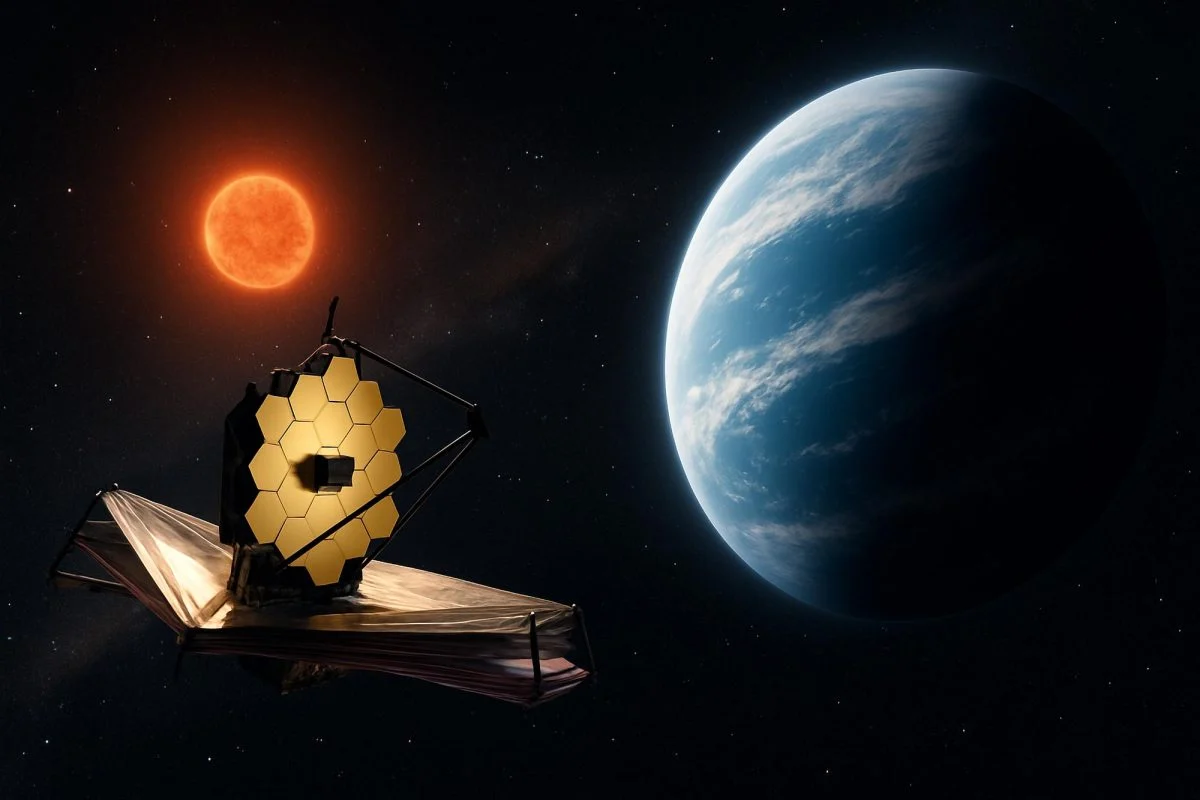

Astronomers recently announced a tantalizing discovery: using the James Webb Space Telescope, researchers detected potential biosignature gases—dimethyl sulfide (DMS) and dimethyl disulfide (DMDS)—in the atmosphere of K2-18b, a distant planet orbiting within its star’s habitable zone.
On Earth, these molecules are produced almost exclusively by life, sparking cautious excitement that we may be closer than ever to finding life beyond our solar system. Although the detection hasn’t yet reached the gold standard of scientific proof, the independent confirmation using different instruments and wavelengths has strengthened the case for K2-18b as a promising candidate for habitability. Still, researchers emphasize the need for rigorous follow-up to rule out unknown non-biological processes and confirm these extraordinary findings.
Building on this pivotal moment, it’s clear that discovering life elsewhere will demand much more than a single detection. To truly understand a distant world, scientists must move beyond atmospheric signatures alone, considering a planet’s surface, interior, and broader environmental context. With the unparalleled capabilities of the Webb Telescope, we are not only glimpsing atmospheric hints but laying the groundwork for a comprehensive new era of astrobiology.
Webb’s Power and the Challenge of Finding Biosignatures
NASA’s James Webb Space Telescope is opening a new chapter in the search for life beyond Earth. But finding life is about more than detecting a few atmospheric gases — context is crucial. To confidently identify signs of life, scientists must also understand a planet’s surface, interior, and surrounding environment.
Thanks to its unmatched infrared sensitivity and resolution, Webb can study small, rocky planets outside our solar system in greater detail than ever before. It can determine whether these distant worlds have atmospheres and, importantly, analyze the chemical makeup of those atmospheres for signs of habitability — and potential biosignatures, such as gases that might be produced by living organisms.
However, detecting biosignatures remains extremely challenging. For a single planet, Webb may need hundreds of hours of observation time, and even then, the evidence might not be clear-cut. Factors like the aging of a star and changes in a planet’s atmosphere over time can complicate the search. Additionally, many of the planets Webb can observe orbit stars that are far less hospitable than our Sun.
The Process of Confirming Life Beyond Earth
Finding life elsewhere in the universe is also a process, and the detection of a single potential biosignature would not constitute discovery of life. We would need follow-up studies and multiple converging lines of evidence to confirm true biosignatures and rule out false positives, possibly including independent data from multiple missions and extensive atmospheric modeling.
If observations are made that suggest a potential biosignature gas, one of the most important implications is the need for follow-up studies. Models can be developed for both biological and nonbiological explanations. From these, predictions are made, which can then be tested with further observations. If life is ruled out, these negative results are also extremely important for the progress of astrobiology, as they help us avoid false positives and improve our future searches for biosignatures on similar worlds.
Webb’s Unexpected Pioneering Role
While not designed to search for life on other planets, Webb’s performance has made it the first observatory capable of characterizing the atmospheres of some of the most promising small planets orbiting cooler stars. These early observations are laying the scientific and technical foundation for future missions, such as NASA’s planned Habitable Worlds Observatory, which will specifically target Earth-like planets around Sun-like stars when it launches.
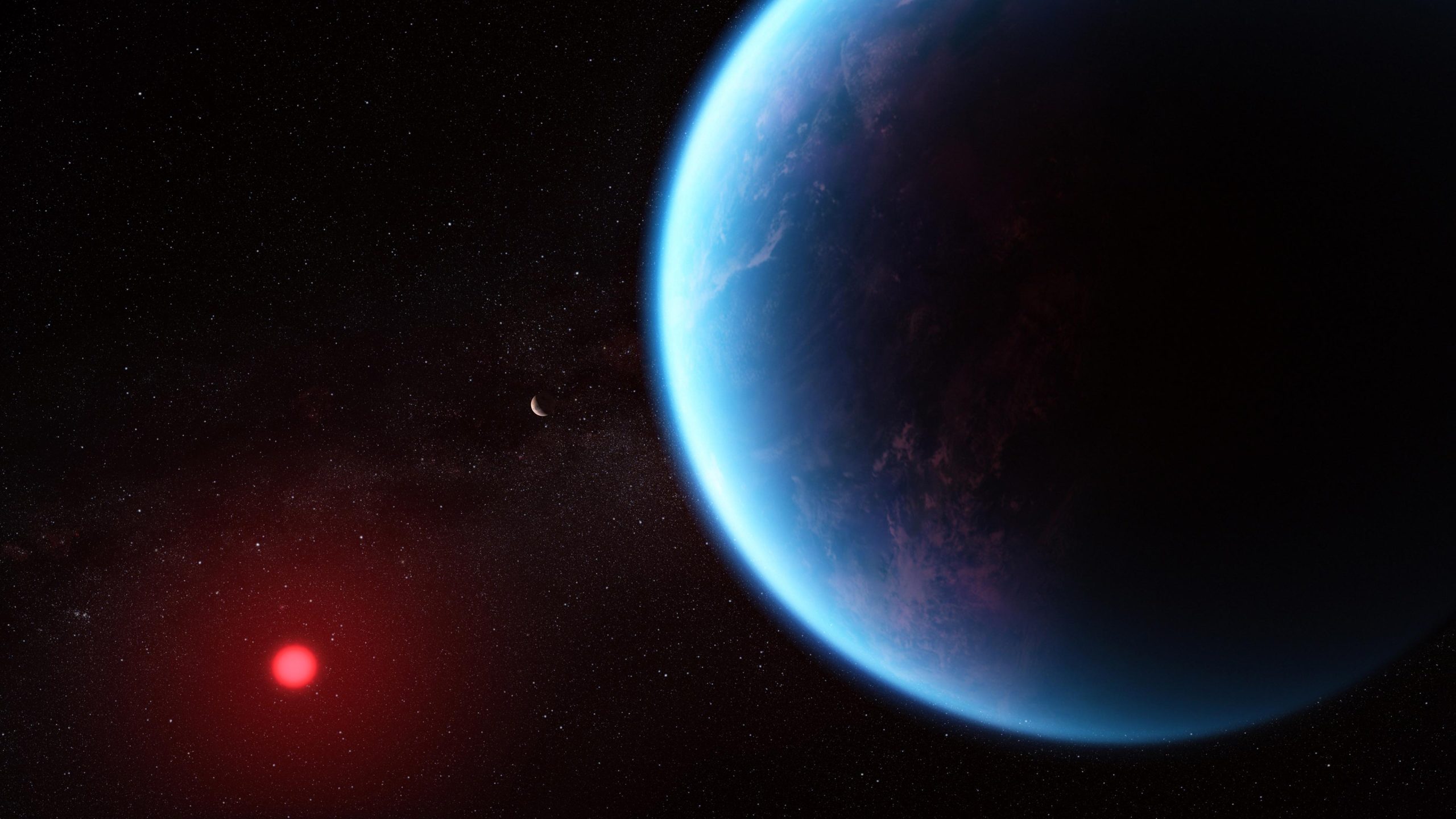
One new frontier of Webb’s science is the study of Hycean planets – a theoretical class of potentially habitable worlds that are larger than Earth, with relatively thin hydrogen-rich atmospheres and substantial liquid water oceans. Webb is enabling researchers to investigate whether K2-18 b could be one such planet, using rich spectral data to refine our understanding. The concept of a Hycean planet is very new, and the environmental context for any potential biosignatures is still being explored. As this field rapidly evolves, Webb’s observations of Hycean worlds will continue to drive discovery and inform the next generation of scientific exploration.