
ISLAMABAD: Prime Minister Shehbaz Sharif on Friday reaffirmed the government’s resolve to defeat terrorism through a unified national efforts, stressing that peace, stability and prosperity remained core objectives.
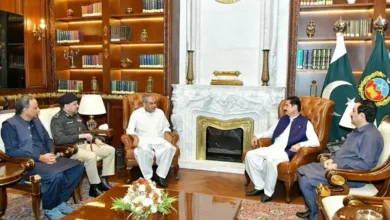
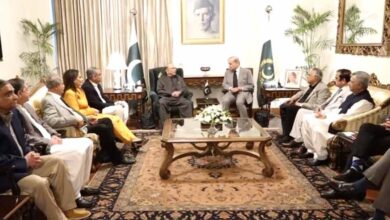
Chairing a meeting of the Qaumi Paigham-e-Aman Committee (QPAC), PM Shehbaz said the committee would play a pivotal role in strengthening the national narrative against extremism and terrorism, similar to the historic role played by ulema in the creation of Pakistan.
“This task is difficult but not impossible,” the premier remarked while terming terrorism as the most serious challenge and stressing the need for collective resolve.
Highlighting that more than 100,000 Pakistanis had embraced martyrdom in the war against terrorism, the premier urged the international community to acknowledge the country’s immense sacrifices.
The remarks come as the country has witnessed a notable surge in terror incidents since Afghan Taliban took over Kabul in 2021. In 2025, the law enforcement agencies in Pakistan, as per the statistics revealed by Inter-Services Public Relations (ISPR) Director-General Lieutenant General Ahmed Sharif Chaudhry, carried out 75,175 intelligence-based operations (IBOs) across the country, wherein as many as 2,597 terrorists were killed.
The PM also pointed out that Islamabad possessed concrete evidence of external support being extended to the terrorist elements in the country and expressed the confidence that Pakistan would once again defeat terrorism.
Meanwhile, speaking on the occasion, Minister for Information Attaullah Tarar said the national narrative to discourage terrorism and promote peace and stability would be further strengthened.
The minister noted that the QPAC members would visit different parts of the country to convey a message of peace and counter hate-based narratives.
Tarar also said that a two-day conference would be organised in Khyber Pakhtunkhwa, bringing together ulema from all schools of thought to promote peace and discourage terrorism.
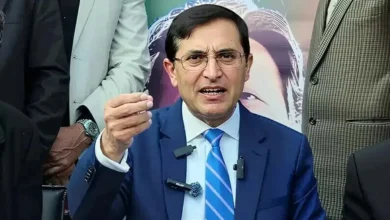
Expressing his views, Pakistan Ulema Council (PUC) Chairman and Coordinator of the QPAC, Hafiz Muhammad Tahir Mahmood Ashrafi, said committee members would visit terrorism-affected areas, interact with local communities, religious scholars and the armed forces, and serve as frontline ambassadors of peace.
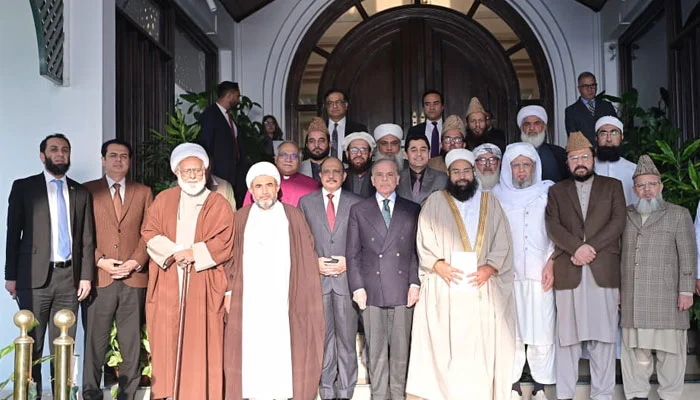
Additionally, participants of the meeting, including ulema from various schools of thought and representatives of minority communities, expressed full support for the government’s initiative and unanimously declared terrorists and Fitna-al-Khawarij as enemies of the state and stressed the need to counter anti-state narratives, particularly by positively engaging and guiding the youth.
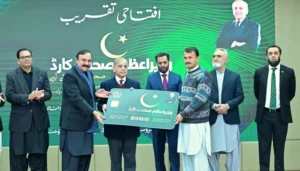
Prime Minister Shehbaz Sharif on Friday revived and extended the Health Card programme to Islamabad, Azad Jammu and Kashmir (AJK) and Gilgit-Baltistan (GB), reaffirming the federal government’s commitment to providing quality healthcare as a fundamental right for every citizen, regardless of social or economic status.
Addressing the ceremony, the premier said the initiative marked another major step towards delivering healthcare facilities at people’s doorsteps.
Recalling the launch of the scheme in 2016 under the leadership of former prime minister Nawaz Sharif, he said the programme was later expanded rapidly across provinces. He stressed that nothing was more valuable in life than health.
“If there is health, there is education; if there is health, there is dignified employment; if there is health, there is progress in every field of life,” he remarked.
PM Shehbaz said while affluent segments of society could afford expensive treatment anywhere in the world, the real test of the state lay in protecting the poor, widows, orphans and daily wage earners who struggled to make ends meet.
“If a labourer falls ill and leaves this world without treatment, his children are left in permanent darkness. Healthcare is the right of every Pakistani — whether a prime minister or a street vendor,” he said.
Congratulating Federal Health Minister Mustafa Kamal, the secretary health and their entire team, the prime minister urged transparent implementation through third-party monitoring to ensure treatment was provided at the right facilities and with appropriate standards.
He expressed confidence that honest execution of the programme would not only serve the people but also bring reward in this world and the hereafter.
Expressing hope for swift and effective implementation, the prime minister said the programme would be personally monitored through visits and inspections in collaboration with Islamabad’s health leadership, parliamentarians, the chief minister of Gilgit-Baltistan and the premier of AJK.
Responding to a demand to extend the programme to Sindh, he termed the proposal valid and assured that he would personally take up the matter with the chief minister of Sindh.
He noted that the programme was progressing rapidly in Punjab, with billions of rupees being spent on healthcare, and congratulated the Punjab government on its efforts. He added that while other provinces had their own health initiatives, efforts would be made to ensure similar facilities nationwide.
Earlier, Mustafa Kamal said the revived programme would provide free, cashless healthcare to nearly 10 million residents of Islamabad Capital Territory, Azad Jammu and Kashmir and Gilgit-Baltistan.
He said the programme ensured citizens could receive treatment without worrying about affordability during moments of pain and distress.
Sharing operational details, Kamal said around 70 hospitals were being empanelled under the Prime Minister’s Health Card across Islamabad, AJK and Gilgit-Baltistan, including 20 additional hospitals in Islamabad alone.
He added that cardholders from these regions living in Karachi would also be able to access treatment at 16 designated hospitals in the city.
He noted that Sindh remained the only province where the Prime Minister’s Health Card was not yet operational, while Punjab, Khyber Pakhtunkhwa, Balochistan and the federal territories were already covered.
Referring to earlier proposals, he said a plan covering 10 rural and urban districts of Sindh at an estimated cost of Rs24 billion had been prepared.
“If funding is provided for just two years, the programme can become self-sustaining from the third year onward,” he said, expressing hope that healthcare deprivation in Sindh could also be addressed.