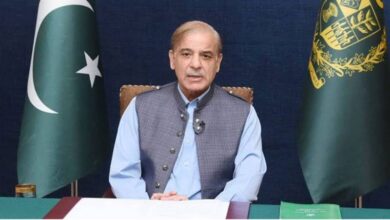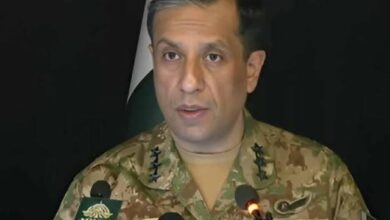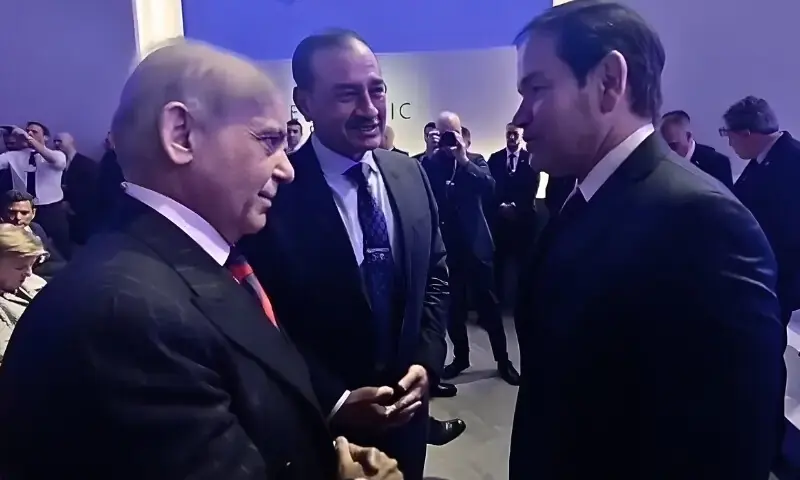

DAVOS: Prime Minister Shehbaz Sharif and Chief of Army Staff and Chief of Defence Forces Field Marshal Syed Asim Munir have drawn significant global attention during the ongoing World Economic Forum (WEF) annual meeting in Davos, emerging as key figures among international leaders.
According to a statement issued by the Prime Minister’s Office, both leaders are actively participating in high-level discussions at the forum, where global political and economic challenges are being debated. Their presence and engagements have made them a focal point for international delegates attending the prestigious event.
On the sidelines of the forum, the prime minister and the field marshal held several informal and friendly interactions with world leaders. These meetings included discussions with Azerbaijan’s President Ilham Aliyev, US Secretary of State Marco Rubio, and Saudi Foreign Minister Prince Faisal bin Farhan Al Saud, reflecting Pakistan’s continued diplomatic outreach.
Prime Minister Shehbaz Sharif and Field Marshal Asim Munir also attended a special address by US President Donald Trump, where they were seen engaging in cordial exchanges with other international participants. Observers noted warm conversations and positive interactions, highlighting Pakistan’s visible role at the global gathering.
The World Economic Forum continues to bring together political leaders, policymakers, and business figures from across the world, with Pakistan’s leadership maintaining an active presence in discussions shaping global economic and strategic trends.
Moreover, Pakistan’s Prime Minister Shehbaz Sharif on Thursday formally signed the charter of the “Board of Peace,” an international initiative led by U.S. President Donald Trump. The signing took place during the World Economic Forum (WEF) annual meeting in Davos, Switzerland. The board was originally proposed to support the Gaza ceasefire, but its mandate has now been expanded to address global conflicts beyond the Palestinian territories.
The signing ceremony was part of a session chaired by President Trump, where leaders from several countries took turns endorsing the initiative. In his address, Trump said the board would work in conjunction with the United Nations, aiming to support peace efforts without replacing the existing international system. He called the board a flexible and “unique” platform that could tackle major global challenges more effectively.
Trump emphasized the potential of combining the board’s resources with the United Nations’ capabilities. “Once this board is completely formed, we can do pretty much whatever we want to do, and we’ll do it in conjunction with the United Nations,” he said. He added that the U.N.’s potential had not been fully utilized, and the board could play a role in unlocking new avenues for diplomacy and conflict resolution.
Around 35 countries have already committed to joining the Board of Peace, including Saudi Arabia, the United Arab Emirates, Egypt, Turkey, and Belarus. Israel and Hungary, both close allies of Trump, have also confirmed participation. However, many major global powers and traditional U.S. allies remain cautious. No other permanent member of the U.N. Security Council has formally joined. France has declined, Britain has opted out for now, Russia is still reviewing the proposal, and China has not given a response.
The initiative has received backing from a U.N. Security Council resolution linked to Trump’s Gaza peace plan. According to a U.N. spokesperson, engagement with the board will be limited to that framework. This reflects a cautious approach by the United Nations, which seeks to maintain its role as the primary platform for global diplomacy.
The signing highlights Pakistan’s active participation in international diplomacy. By joining the board, PM Shehbaz has positioned Pakistan as a supporter of multilateral initiatives aimed at peace and stability. Observers say Pakistan’s involvement reflects its commitment to playing a constructive role in resolving regional and global conflicts.