
A subtle but emerging change is taking place. India, China, and other BRICS countries are drifting away from the US dollar, and this is slowly pushing the global financial system towards a wider, multipolar platform. The US dollar has been the backbone of global trade, reserves, and commodities for several decades. However, the increasing pressure on its unassailable status is slowly becoming apparent. Economies in Asia, Africa, Latin America, and the Middle East are questioning the rationale of relying on one currency, which is largely determined by one country, and they are looking for new ways and means to reshape global finance.
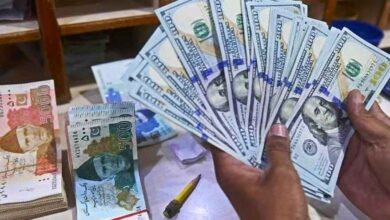
India and China are leading the charge in this direction. Both countries have significantly reduced their US Treasury holdings over the past year. India has sold over $50 billion worth of US Treasuries, marking a 21% reduction in its reserves and the largest annual fall in four years. China has dumped about $71 billion in US debt between October 2024 and October 2025. Together, the BRICS countries have slashed their US Treasury holdings by $29 billion in one month, indicating a coordinated approach to managing reserves, even if it is a low-key process.
There are several reasons for this shift. The US national debt has surpassed $38 trillion, interest rates are highly volatile, bond prices are fluctuating, and the cost of borrowing is rising. Then, of course, there is geopolitics, which introduces a new level of complexity. The sanctions imposed on Russia have shown that dollar-denominated assets can be weaponized, frozen, or repurposed.
“Using one currency is no longer secure,” says Khalid Mustafa, a financial analyst. “Countries are turning to diversification of their reserves, and gold is re-emerging as a stabilizing asset in the face of political and financial turmoil.”
It is not only a matter of diversifying reserves, however. International trade itself is increasingly taking place outside the dollar. China is conducting trade in yuan with over 40 countries, while India has opened rupee accounts with 20 foreign banks. BRICS is also exploring a digital currency framework that would facilitate cross-border transactions, including pilot projects such as Project M Bridge, which combines gold with national currencies to improve stability.
As observers note, there is a sense of a turning point in the dominance of the US dollar. Joyce Chang of JPMorgan explains the situation this way: “The dollar will remain a major world currency, but it won’t be the only major force in world finance.”
This trend indicates a shift towards a multipolar world of finance, in which reliance on the dollar is no longer a given. It has profound implications for world trade, investment strategies, and the balance of power in the global economy.