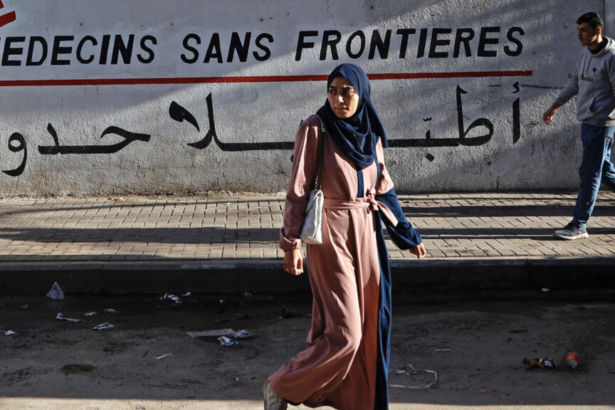

The Israeli government has made the decision to close down the operations of Doctors Without Borders (MSF) in Gaza. This decision has raised concern among humanitarian agencies, as the region is already facing a serious crisis.
According to Israeli officials, the closure of MSF operations in Gaza has been made due to the organization’s failure to provide the complete list of its Gaza-based staff. The Israeli government considers this a security issue, as it is bound by certain protocols that all international organizations must follow in a conflict zone that is as sensitive as the one in Gaza, according to Israel.
An Israeli official, who wished to remain anonymous, clarified that all humanitarian organizations must go through vetting procedures to ensure that their relief activities are not being used for other purposes. “In active combat zones, transparency about personnel is critical for security,” the official said.
MSF has dismissed the Israeli government’s claim that the closure of its operations in Gaza is a necessary security procedure. In a statement, MSF said that the Israeli government is using bureaucratic procedures to limit humanitarian access. “This decision further limits the already scarce medical care available to civilians in Gaza,” MSF said, as it is now faced with “impossible choices” that make it difficult for the organization to maintain its independence and impartiality.
The suspension comes against the backdrop of a strained health system in Gaza, which has been weakened by fighting, fuel shortages, and damage to hospitals and health clinics. Humanitarian agencies have pointed out that any limitations on humanitarian access only serve to exacerbate the suffering of civilians, particularly women, children, and the elderly.
For several years, Doctors Without Borders has been providing emergency medical services, surgical care, and trauma care in Gaza. Since the recent escalation of violence, MSF has been operating in extremely difficult conditions, often with limited access to basic equipment and electricity.
International humanitarian law demands that all parties to a conflict permit and facilitate rapid and unhindered humanitarian access to civilians in need. Human rights organizations have stated that administrative or security measures should not be used to deny access to necessary humanitarian aid.
The outcome of any negotiations between the Israeli government and MSF regarding the suspension is not clear at this point. In the meantime, humanitarian organizations have warned that any further disruption in the provision of medical services in Gaza could have disastrous for a population already facing a deepening humanitarian crisis.