
The Federation of Pakistan Chambers of Commerce and Industry (FPCCI) has released a nationwide survey report indicating an improvement in Pakistan’s Transparency and Accountability Index, with a majority of citizens confirming that they have not personally faced corruption.
The FPCCI initiated the first private-sector-led nationwide survey in Pakistan to assess transparency and accountability across public institutions.
As per the report, 67 percent of respondents in the countrywide survey said they had not experienced any form of corruption, while only 24 percent believed that nepotism in public institutions had violated merit.
The FPCCI report further stated that just five percent of respondents claimed they had personally witnessed a government official accumulating wealth through illegal means.
As per the FPCCI survey report, the Index of Transparency and Accountability in Pakistan (i-TAP) was commissioned to the renowned international survey firm IPSOS, with the objective of developing a data-driven index to evaluate transparency and accountability in the country.
The survey results revealed a clear gap between public perception of corruption and respondents’ personal experience or direct observation. While 68 percent of respondents believed that bribery was common in government institutions, only 27 percent reported having personally encountered a situation where a bribe was demanded.
Similarly, 56 percent of respondents perceived nepotism to be widespread in public institutions, yet only 24 percent said they had personally experienced a situation where merit was compromised due to favouritism. Although 59 percent believed that illegal wealth accumulation existed among public officeholders, just five percent said they had directly witnessed such conduct.
The nationwide survey was conducted with responses from 6,018 individuals. Among them, 73 percent said they had never been required to pay a bribe, while 76 percent stated they had no personal encounter with nepotism.
The report noted that Islamabad ranked highest on the transparency index, followed by Punjab and Khyber Pakhtunkhwa. Among anti-corruption bodies, the National Accountability Bureau (NAB) was perceived as the most effective institution.
The survey also recorded improved public awareness regarding accountability mechanisms, with respondents showing familiarity with institutions such as the FIA, federal and provincial ombudsmen, and the National Commission on Crimes Against Humanity and Integrity Accountability (NCCIA).
Public interaction with state institutions was found to be highest with the police, followed by public hospitals, WAPDA, and educational institutions.
Merit-based recruitment was identified as the most positively viewed reform in public institutions. In terms of transparency based on public experience, government hospitals ranked highest, followed by NADRA, educational institutions, and the traffic police.
The report found that 31 percent of respondents were satisfied with the government’s anti-corruption measures, while 37 percent remained neutral and 32 percent expressed dissatisfaction.
Awareness of the Right to Information law stood at only 11 percent, while 34 percent said they were aware of procedures to report corruption.
NADRA received the highest rating for service quality, while awareness of whistleblower protection laws remained limited to just 15 percent of respondents. Only eight percent reported ever having direct interaction with an anti-corruption agency.
Perception-wise, traffic police, hospitals, the Federal Board of Revenue (FBR), and educational institutions were viewed more positively.
Younger respondents reported more positive experiences compared to older citizens, while women and urban residents showed relatively higher trust in the system than rural populations.
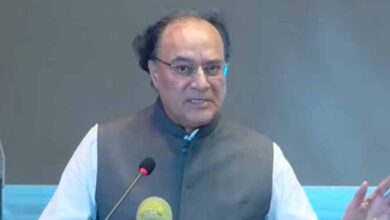
According to the channel’s report, the FPCCI formally launched the Transparency and Accountability Index at a ceremony in Islamabad, where Federal Minister for Planning Ahsan Iqbal addressed the audience.
The minister said the survey was conducted to reach factual, data-based conclusions and claimed that a political group had promoted negative propaganda for political gains.