
Russia has indicated that it is ready to function in a “new reality” where there are no limits to nuclear weapons stockpiles in the event that the New START treaty with the US is not extended, as the treaty with the US is set to expire on February 5.
The historic treaty was signed in 2010 by then US President Barack Obama and Russian President Dmitry Medvedev. It limited the number of deployed strategic nuclear warheads and delivery vehicles, and for over a decade, it remained the only remaining pillar of bilateral nuclear arms control between the US and Russia.
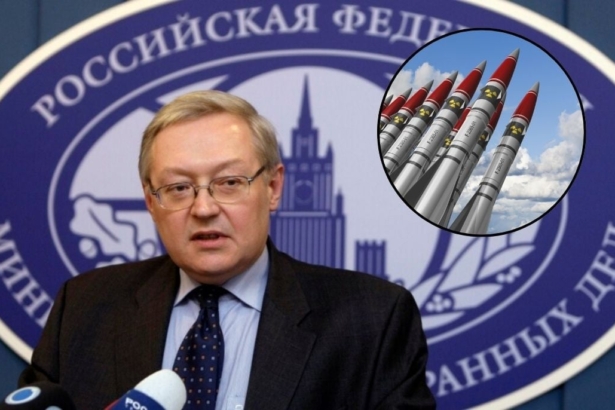
Speaking in Beijing, Russia’s Deputy Foreign Minister and top arms control negotiator Sergei Ryabkov said that Russia had not received any meaningful response from the US regarding proposals to extend some form of restraint. “The absence of an answer is also an answer,” Ryabkov told Russia’s state news agency TASS. “We are ready to live in a new reality, where the two largest nuclear powers will not have any treaty-based constraints on their nuclear activities for the first time in decades.”
Ryabkov’s comments highlight the freeze in US-Russia relations, which has been exacerbated by the conflict in Ukraine, sanctions, and the near-complete breakdown of arms control talks. Russia suspended its New START obligations in 2023, although it had indicated that it would continue to abide by the treaty’s numerical constraints until its expiration.
The deputy foreign minister also expressed support for China’s stance on arms control, in the face of long-standing US demands for Beijing to be brought into future nuclear agreements. China has consistently maintained that its nuclear force is much smaller than those of the US and Russia, and therefore should not be bound by the same rules.
In addition to nuclear ceilings, Ryabkov expressed concern about US plans for missile defence. He indicated that if the US were to proceed with large-scale increases in missile defence capabilities, including plans for deployment in Greenland, Russia would be forced to take “compensatory” military action. Russia has long maintained that US missile defence systems are destabilizing strategic stability by undermining nuclear deterrence.
Ryabkov also commented on Iran, criticizing US policy in negotiations over Tehran’s nuclear program. He indicated that US proposals to Iran were essentially ultimatums, in keeping with Russia’s general opposition to US pressure politics in the Middle East.
As New START set to lapse, analysts warn that the absence of verification mechanisms and legally binding caps could heighten mistrust and fuel a renewed arms race, at a time when global security is already under severe strain.