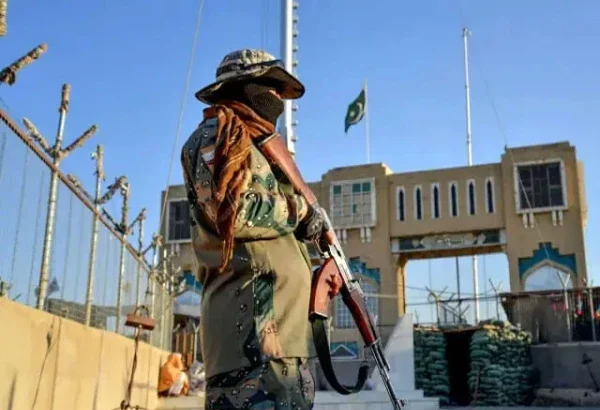

A leading international journal has described Pakistan’s decision to close its border with Afghanistan as a justified and strategic step taken in the interest of national security.
According to a report published by Eurasia Review, border management between Pakistan and Afghanistan is not merely a matter of trade or customs for Islamabad, but a question of survival and security. The journal noted that terrorist activities originating from Afghan territory have increased in recent years, resulting in the loss of lives of Pakistani security personnel and civilians.
The report stated that Pakistan’s move to shut key border crossings was aimed at protecting its citizens and preventing further attacks. It added that from Pakistan’s perspective, terrorism remains the main obstacle in normalising relations with Kabul.
The article also highlighted the internal and external challenges faced by Afghanistan under the Taliban regime, saying that instability within the country has contributed to wider regional concerns.
International experts quoted in the report stressed that the Afghan authorities must make a clear decision on whether they will continue to allow militant groups to operate from their soil or work with neighbouring countries for peace and development.
The journal further observed that cross-border infiltration and militant activities have not only affected Pakistan but have also raised security concerns in other regional countries, including Iran and Tajikistan.
The analysis concludes that in the current situation, Pakistan’s border measures reflect a security-driven policy rather than an economic one, aimed at ensuring stability and protecting national interests.
Moreover, Pakistan has suffered heavy financial losses following the closure of all border crossing points with Afghanistan, officials say. The crossings have been shut for almost a month due to rising border tensions, affecting trade and livelihoods on both sides.
The closure has disrupted Pakistani exports to Afghanistan and Central Asian countries. Around 1,000 trucks carrying goods are currently stranded at Karachi Port, causing delays and financial setbacks for exporters. The government sources estimate that Afghanistan usually imports about $150 million worth of goods from Pakistan each month, while Pakistan imports roughly $60 million from Afghanistan.
The shutdown has also impacted thousands of workers, with an estimated 20,000 to 25,000 people affected. Prices of agricultural products in Afghanistan have fallen sharply. For example, a 10-kilogram packet of Afghan grapes, once sold for 4,500 Pakistani rupees, is now being sold for just 120 to 140 rupees.
Overall, the border closure has led to estimated losses of around $200 million in just the first 24 days. Authorities warn that prolonged disruptions could further harm trade, workers, and the economy in the region.