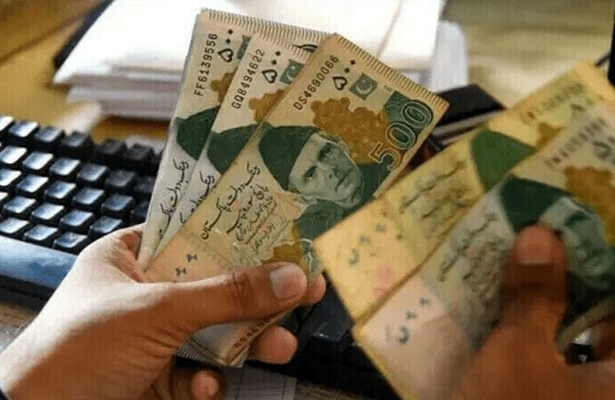

The snapshot of debt and interest commitments put forward by the Ministry of Finance for FY 2025 has placed Pakistan’s finances under the microscope in the Senate session on February 13, 2026. The total debt of the country is recorded at Rs 80.5 trillion, of which Rs 54.5 trillion comprises domestic borrowings and Rs 26 trillion comprises external debt.
During the past five years, the Centre has been gradually chipping away at the debt burden: Rs 16.5 trillion in FY 2021, Rs 23.2 trillion in FY 2022, Rs 30.2 trillion in FY 2023, Rs 28 trillion in FY 2024, and Rs 27.1 trillion in FY 2025. The interest outgo has also risen, from Rs 2.7 trillion in FY 2021 to Rs 8.9 trillion in FY 2025, reflecting increased borrowing and the cost of servicing existing loans.
Trade performance is mixed. The Ministry of Commerce has reported exports at $32 billion and imports at $58.3 billion for FY 2024-25, leaving a trade shortfall of $26.3 billion. During the six months that ended in December 2025, exports reached $15.1 billion, imports stood at $34.5 billion, taking the half-year deficit to $19.3 billion-around 36% higher compared to the same period a year earlier. Glints of resilience, however: exports rose to $30.6 billion in FY 2022-23 from $27.7 billion the previous year, reflecting Pakistan’s potential to increase foreign earnings.
The financial markets have been very volatile, where the 100-index of the Pakistan Stock Exchange has oscillated and recently slid to around 179,000 points in the wake of cautious investor sentiment. Gold has jacked up-its domestic price has risen to Rs 528,562 per tola while the price on the global front has gone up as high as near $5,058 per ounce.
Other indicators reflect activity and momentum, such as the 3,881 new companies that were registered with the Securities and Exchange Commission of Pakistan in January 2026, while Dubai remained a major remittance corridor, sending more than $540 million to Pakistan.
The cost for households is increasing while the price of flour in Karachi has started inching upwards ahead of Ramadan, and even street foods like samosas could sell at Rs 100 apiece this season, underlining inflationary pressures.
On the international front, Saudi Arabia has evinced keen interest in the State of Pakistan’s oil and gas sector, reflecting confidence in the long-term prospects. Meanwhile, Moody’s reported that Pakistan’s banking system outlook is gradually improving, adding a note of optimism for investors.
Amid these developments, Pakistan navigates a delicate balance between debt management, trade deficits, rising prices, and economic reform—showcasing the complex interplay of policy, markets, and citizen concerns in shaping the country’s financial future.