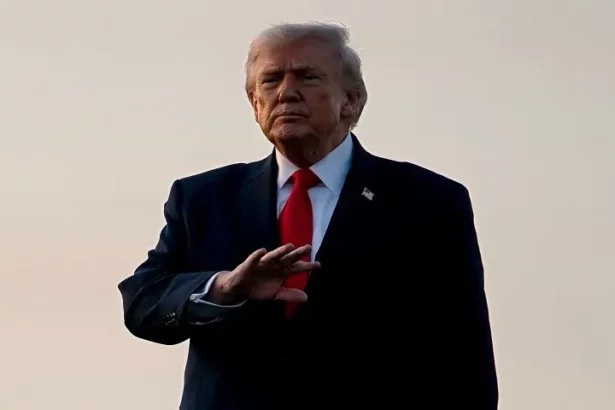

Donald Trump has openly backed the prospect of regime change in Iran, saying it could be “the best thing that could happen,” as the Pentagon ordered a second US aircraft carrier to the Middle East amid rising tensions.
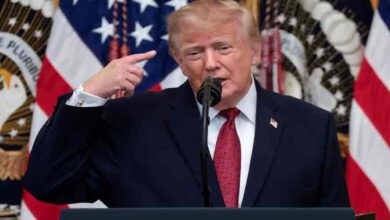
Speaking after a military event at Fort Bragg in North Carolina, Trump criticised Tehran’s leadership and signalled a tougher approach if nuclear diplomacy fails. Asked whether he supported regime change, he replied that it “seems like that would be the best thing,” while declining to name any preferred successor.
The remarks came as Washington and Tehran attempt to revive talks over Iran’s nuclear programme. The US wants negotiations to address not only nuclear restrictions but also Iran’s ballistic missile programme, regional alliances with armed groups, and human rights concerns. Tehran has said it is open to nuclear limits in exchange for sanctions relief but refuses to link the talks to its missile capabilities.
Trump warned that if no agreement is reached, military action remains an option. “If we need it, we’ll have it ready,” he said, referring to the deployment of additional naval forces.
Second Carrier En Route
The Pentagon confirmed that the aircraft carrier USS Gerald R. Ford will head to the Middle East, joining the USS Abraham Lincoln and its accompanying strike group. The move marks a significant show of force, recalling last year’s US strikes on Iranian nuclear facilities.
The Ford, the newest and largest carrier in the US fleet, had been operating in the Caribbean and previously took part in operations near Venezuela. Officials said it would take at least a week to reach the region.
With only 11 aircraft carriers in service, such deployments are rare and carefully scheduled. Navy officials have cautioned that extended missions can strain crew morale, as the Ford has already been at sea for months beyond its typical nine-month rotation.
The carrier can host more than 75 aircraft, including F/A-18 Super Hornets and E-2 Hawkeye surveillance planes, and is equipped with advanced radar and missile defence systems. It will be supported by guided-missile cruisers and destroyers capable of air, surface and anti-submarine warfare.
Diplomatic Uncertainty
Despite the military buildup, diplomatic channels remain open. However, Trump’s blunt rhetoric, coupled with Tehran’s vow to retaliate against any strike, has heightened fears of a broader regional conflict.
As Washington reinforces its presence in the Middle East, the balance between diplomacy and deterrence appears increasingly fragile, with the coming weeks likely to determine whether talks prevail or tensions escalate further.