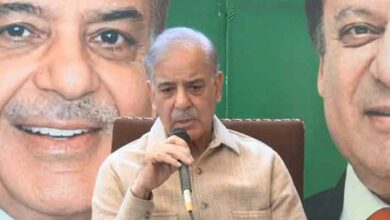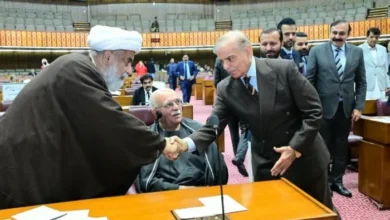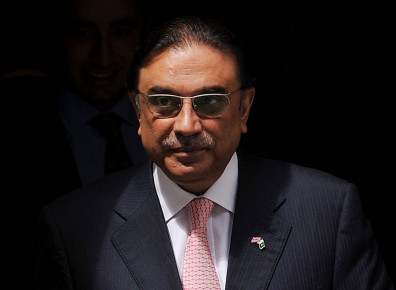

President Asif Ali Zardari has reaffirmed his commitment to political cooperation with the ruling Pakistan Muslim League-N, declaring that he intends to continue working alongside the party in the future to ensure stability and continuity in governance, it was reported on Tuesday.
Speaking at a public gathering at Nawab Palace in Vehari, the president emphasised that effective governance demands flexibility and political maturity.
He argued that cooperation among political forces acts as a safeguard against extremist tendencies and institutional instability. In a period marked by economic strain and political polarisation, he framed collaboration as a pragmatic necessity rather than a matter of convenience.
Turning to regional tensions, Zardari issued a warning regarding India’s threats to suspend water flows, describing such statements as merely “a trailer” of more serious challenges ahead.
He reiterated Pakistan’s longstanding position on Kashmir, calling it the country’s “jugular vein” and asserting that not even an inch could be compromised.
Referring indirectly to the events of August 2019, when India revoked the special constitutional status of Indian-administered Kashmir, he criticised what he portrayed as a passive response at the time, recalling that a prime minister had asked, “What can we do?”
The president’s remarks also included sharp criticism of former prime minister and PTI founder Imran Khan. Zardari said that imprisonment is endured with dignity and resilience, but accused the former premier of relying solely on rhetoric.
“If one wants to pursue politics, sacrifices are required,” Zardari said, adding that true leadership is tested during adversity. He further remarked that the PTI founder now remembers his children while in jail, suggesting that political struggles demand fortitude.
Zardari alleged that during PTI’s four-year tenure in government, the country experienced stagnation. He went further, claiming that the period was effectively governed not by PTI but by former intelligence chief Lt General Faiz Hameed. The assertion reflects ongoing political disputes over civil-military dynamics during that administration.
In comments directed at the political situation in Khyber Pakhtunkhwa, the president said that political actors there appeared more focused on confrontation than on constructive nation-building.
Zardari has said that while efforts are underway to ensure stability in Pakistan, tangible and meaningful improvement in the country’s economic and governance landscape will take time.
He described the farming sector as the only sustainable solution to Pakistan’s mounting economic challenges, arguing that long-term prosperity depends on strengthening farmers and modernising agricultural practices.
“Agriculture is the backbone of our economy,” he said, emphasising that empowering cultivators and investing in rural infrastructure would not only boost productivity but also address food security and export potential. He stressed that national progress is inseparable from the welfare of the farming community.
The president underscored the critical importance of water management, noting that water is indispensable not only for crop production but also for public health.
He observed that Pakistan is endowed with abundant natural resources, yet policy inconsistencies and implementation gaps have hindered the country from fully leveraging its potential.
In an effort to modernise the sector, Zardari revealed that he has directed the Sindh government to allocate specific funds for drip irrigation systems and other advanced agricultural technologies.
He described water-efficient irrigation methods as essential in the face of climate change, depleting groundwater levels and erratic rainfall patterns.
Reflecting on his earlier tenure, Zardari recalled that wheat production had been in a worrying condition when he first assumed office. He suggested that strategic planning and targeted interventions had since contributed to improvement in the sector.
The president also reiterated his party’s longstanding commitment to women’s empowerment. He stated that in Sindh, land titles and housing schemes are being allotted in women’s names to promote financial independence and social security.
On governance and political culture, Zardari remarked that effective administration requires flexibility, dialogue and political maturity. He criticised the previous government’s four-year tenure, saying the country had experienced stagnation during that period.
Political cooperation, he argued, is essential to prevent extremist approaches from overshadowing democratic processes.
By placing agriculture and institutional reform at the forefront of his address, Zardari sought to frame stability as a gradual process rooted in structural change rather than short-term fixes.