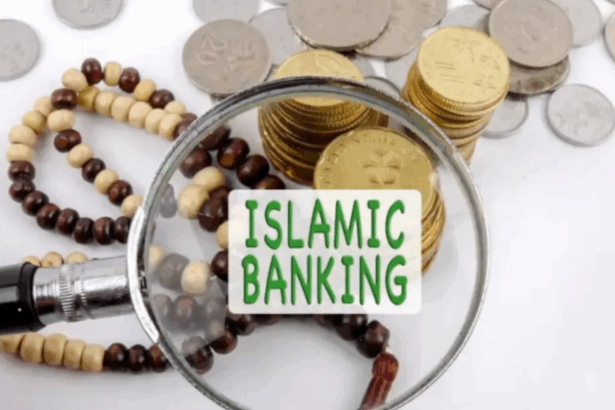

Islamic banking in Pakistan has grown from nothing to a major financial phenomenon in less than four decades. There were no Islamic banks in Pakistan before 1985, but now there are six full-fledged Islamic banks and 16 Islamic Banking Branches, which are subsidiaries or divisions of conventional banks. Today, Islamic banking constitutes a quarter of total banking assets and is growing at a faster rate than conventional banking. The question, however, that still lingers in our minds is: how Islamic is this Islamic banking system?
The establishment of Islamic banking in Pakistan began under President Zia-ul-Haq, towards the end of his Islamization program. In 1985, two committees were appointed by the government to explore the possibility of introducing an interest-free banking system in Pakistan. One committee comprised religious scholars who were asked to assess whether Islamic banking was feasible under Pakistan’s laws. The second committee, comprising economists and experts, was headed by Finance Minister Ghulam Ishaq Khan, who was asked to assess its technical viability.
The technical committee was of the opinion that a genuine Islamic economy needed a major overhauling of our production and consumption patterns, our institutions, and our relations with global financial institutions like the International Monetary Fund and the World Bank. It was also of the opinion that a change in the banking system alone was not only inconsistent but also technically impossible.
Meanwhile, the religious scholars offered incremental measures using “hiyal” or legal devices, including Murabaha, Mudaraba, Ijara, and Bay Mu’ajjal, with the objective of approximating the Shariah principles within the boundaries of the conventional system. Ultimately, the policymakers chose to ignore the recommendations of the technical committee and opted for the hybrid, “Islamic-looking” system, functioning within the debt-based global financial system of Pakistan.
Despite all this, the trust in Islamic banking has helped its growth. People are more interested in “Islamic” banks, owing to religious grounds, and this faith results in lower-cost funds for the bank, as funds are mostly maintained in current accounts, earning no interest. This leads to higher profitability.
Meezan Bank, the market leader in Pakistan’s Islamic banking industry, achieved a net profit of Rs 101 billion in 2024 with an ROE of 30%, while its peer, Habib Bank Limited, achieved a profit of Rs 59 billion with an ROE of 15%, despite the assets of HBL being twice as large.
Shariah boards, comprising respected Islamic scholars, oversee banking products to ensure they remain Shariah-compliant. The question, however, is that the Shariah boards are paid by the banks, which means there is an incentive to accept whatever banking products the banks offer. The real question, therefore, is: do the legal systems, banking products, and even the nomenclature, which refers to interest as “profit,” truly make banking Islamic?
The answer, however, is not clear-cut. In Islam, riba, or interest, is clearly prohibited, but there is no denying the fact that faith, money, and finance are intertwined in a complex dance. In the meanwhile, Pakistani Islamic banking is booming in terms of profitability as well as public trust, with the question of Shariah-compliant banking remaining on everybody’s mind.
Islamic banking is booming in Pakistan, with its growth rate increasing by leaps and bounds, but there is still ambiguity between faith and finance.