
France and India are entering what French President Emmanuel Macron described as a new era of defence cooperation, with plans to jointly produce Rafale fighter jets and helicopters, alongside potential new submarine sales.
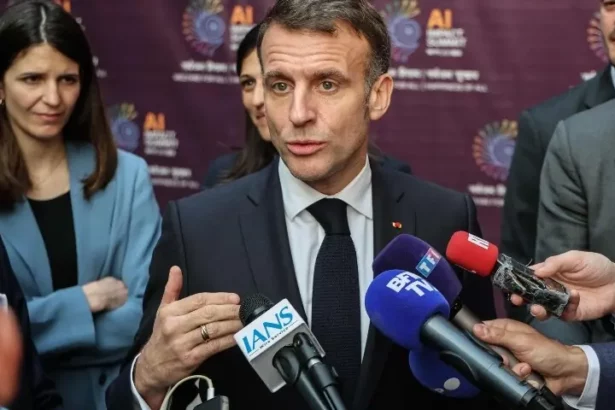
Speaking at the conclusion of a three-day visit to India, Macron said New Delhi’s expected order for 114 additional Rafale fighter jets marks a significant step forward in bilateral defence ties.
“On Rafale, what we want to do is expand. India confirmed a few days ago its willingness to command a new bunch of Rafales … 114 … and to co-produce in India,” Macron told reporters.
Last week, India’s Defence Acquisition Council granted initial clearance for the procurement of 114 more Rafale jets for the Indian Air Force, along with other aircraft and missile systems. The move comes months after the worst fighting in decades between India and Pakistan.
India has already acquired 36 Rafale jets for its air force and placed an order for 26 naval variants of the aircraft for the navy.
The Rafale jets are manufactured by Dassault Aviation, and Indian media reports estimate the 114-jet deal could be worth approximately 3.25 trillion Indian rupees (around $35.65 billion). Reports also suggest that up to 90 of the jets could be produced in India through a joint venture partner yet to be identified.
“Rafale is absolutely key,” Macron said. “I hope we will do it on submarines. We offered additional capacities.”
The Indian Navy currently operates six French-built Scorpene submarines, and local media reports indicate that plans are under consideration to expand the fleet with additional vessels.
During the visit, Macron and Indian Prime Minister Narendra Modi also announced the establishment of the first H125 helicopter assembly line in India. The facility will be set up through a joint venture between Airbus and Tata Advanced Systems.
In addition, France’s Safran and India’s state-owned Bharat Electronics Limited will jointly produce Hammer missiles in India, further strengthening defence industrial collaboration between the two nations.
Rafale jets flown by the Indian Air Force were prominently featured during the four-day conflict between India and Pakistan in May 2025. In the immediate aftermath, Pakistan claimed it had shot down six Indian fighter jets, including Rafales. New Delhi acknowledged “some losses” but denied that six aircraft were destroyed.
Months later, in September, Prime Minister Shehbaz Sharif told the United Nations General Assembly that the Pakistan Air Force had turned “seven of the Indian jets” into scrap and dust.
While details of the new Rafale agreement including co-production terms and final pricing remain subject to technical and commercial negotiations, the proposed expansion underscores the growing strategic partnership between Paris and New Delhi at a time of heightened regional tensions.