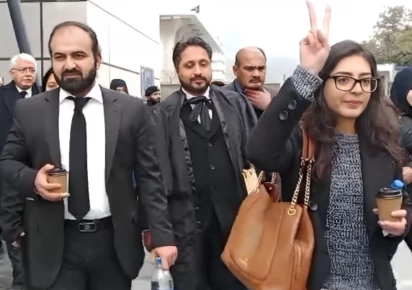

The Islamabad High Court (IHC) on Saturday issued notices in the high-profile case involving rights activist and lawyer Imaan Mazari and her husband, advocate Hadi Ali Chattha. The couple has challenged their convictions related to controversial social media posts.
Justice Muhammad Asif released a two-page written order following the hearing. The court asked for responses to the appeals filed against the January 24 verdict, which sentenced Mazari and Chattha to a combined 17 years in prison under Pakistan’s cybercrime laws.
The couple’s counsel argued that the trial court’s decision was legally flawed and should be annulled. The IHC also took note of applications seeking suspension of the sentences, though no date has yet been set for an early hearing.
During the proceedings, the court directed the registrar to compile the paper books of the case. Once prepared, the matter will be listed for detailed hearing.
Earlier, an anti-terrorism court granted bail to Mazari and Chattha in a separate case involving a confrontation with police. Judge Abul Hasnat Muhammad Zulqarnain allowed post-arrest bail on sureties of Rs10,000 each.
The original case was registered at Secretariat Police Station and includes allegations of a public protest and police altercation. State lawyer Ali Azad representing the accused claimed the charges were baseless and stemmed from fabricated reports.
Earlier, The Islamabad High Court (IHC) is set to hear the appeals of human rights lawyer Imaan Mazari and her husband, lawyer Hadi Ali Chattha, against their convictions in a controversial social media case. Justice Muhammad Asif will preside over the hearing, scheduled for Thursday, February 19. The court will also review petitions seeking suspension of their sentences.
Last month, a sessions court in Islamabad sentenced the couple to a total of 17 years in prison under Pakistan’s Prevention of Electronic Crimes Act (PECA). Imaan and Hadi received five years each under Section 9 for glorifying an offence, 10 years each under Section 10 for cyberterrorism, and two years each under Section 26-A for spreading false information. Fines were also imposed, and all sentences will run concurrently.