
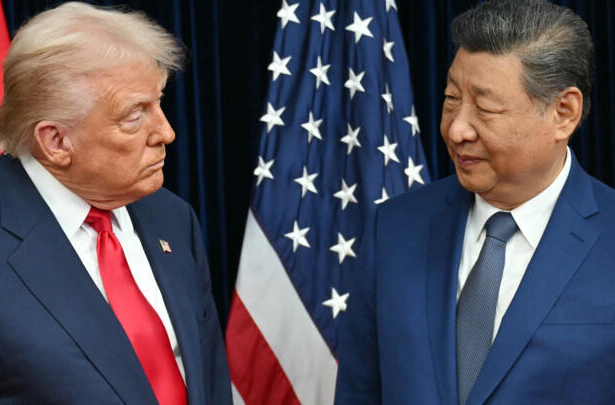

China is closely monitoring the latest ruling by the Supreme Court, which invalidated a set of tariffs imposed during the presidency of Donald Trump, and Beijing says that protracted trade tensions between the two largest economies are harmful.
On Monday, China’s Commerce Ministry called on the United States to withdraw its unilateral tariffs, saying they are not in line with international trade and U.S. domestic laws. “Cooperation between China and the U.S. is mutually beneficial, but conflict is only harmful,” the Commerce Ministry said, emphasizing Beijing’s desire to negotiate rather than fight.
The Supreme Court ruling invalidated a set of tariffs targeting large Asian exporters such as China, South Korea, Japan, and Taiwan, which are key players in the global tech and semiconductor industry. The ruling is a significant blow to the Trump administration’s trade policies that have dominated global markets in the past few years.
Trump reacted to the ruling by announcing that he will impose new tariffs ranging from 10% to 15% under Section 122, a provision that is rarely used. The provision allows the imposition of temporary tariffs with congressional review, which could lead to more litigation.
Chinese authorities, such as Gao Lingyun of the Chinese Academy of Social Sciences, condemned the U.S. tariff measures as “highly arbitrary” and “political weapons,” urging the promotion of trade policies through assessment rather than politics. The Commerce Ministry again confirmed that China will continue to monitor the situation to protect its own interests.
The impact of the decision is global. South Korea emphasized the need to strike a balance of interests with the U.S. to protect industries such as cars, batteries, and semiconductors. India delayed the dispatch of a trade mission to Washington due to tariff uncertainties, which will affect a $500 billion trade agreement. At the same time, European Central Bank President Christine Lagarde called on businesses to look for predictability, urging the establishment of clearly defined tariffs to prevent disruptions.
In light of the high-stakes U.S.-China meeting scheduled for late March and early April, the decision underscores the vulnerability of global trade. Experts point out that both countries need to walk a tightrope, as excessive confrontation could harm not only bilateral relations but also global supply chains, investments, and economic stability.
As markets await clarity, China’s message is clear: diplomacy and cooperation must prevail over unilateral actions that threaten global economic order.