
GUJRAT: Even as Punjab Chief Minister Maryam Nawaz Sharif has taken notice of a policeman being injured by a kite string in Lahore and ordered strict enforcement of the ban on kite flying, the situation in Gujrat tells a very different story.
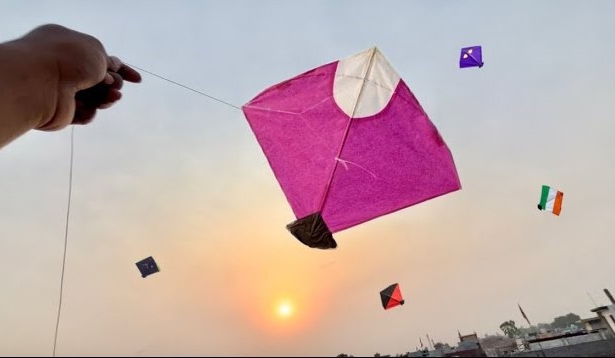
Across several parts of the district, kite flying continues almost openly. From the city’s inner neighbourhoods to towns like Jalalpur Jattan, Lalamusa, Kharian, Gujrat City and surrounding localities, kites can still be seen in the sky during the afternoon and evening hours. Residents say the practice has quietly returned despite a clear provincial ban.
The bigger concern is not just kite flying itself but the widespread use of dangerous chemical and metallic strings, commonly known as dorr, which have previously caused serious injuries and even deaths in Punjab.
Locals say the district administration and police appear unable or unwilling to fully enforce the ban.
“In some areas you can still buy kites and string without much difficulty. Shopkeepers keep them hidden but everyone knows where to get them,” said a resident of the city area. According to residents, the trade shifts locations frequently to avoid occasional raids, but the supply chain continues to operate.
Several citizens questioned why strict enforcement only begins after a tragedy.
“Every year the government announces a ban and warns about the dangers. But when you go to the rooftops in the evening, you still see boys flying kites. Are the authorities waiting for someone to lose their life again?” said another resident.
Police officials claim action is taken whenever information is received. However, people in the area say enforcement remains inconsistent and mostly limited to occasional warnings or short-lived crackdowns.
In the past, deadly kite strings have caused severe throat injuries to motorcyclists and pedestrians, turning what many once considered a traditional pastime into a serious public safety threat.
Chief Minister Maryam Nawaz Sharif recently termed the transformation of kite flying into a “deadly activity” as deeply unfortunate and directed authorities to ensure strict implementation of the ban.
But on the ground in Gujrat, the reality appears far from those directives.
With rooftops once again turning into kite-flying spots and dangerous string quietly circulating in local markets, many residents fear that unless authorities act decisively, the district may once again be heading toward another avoidable tragedy.
For now, the question many citizens are asking is simple: are the authorities waiting for a major accident before the ban is finally enforced?