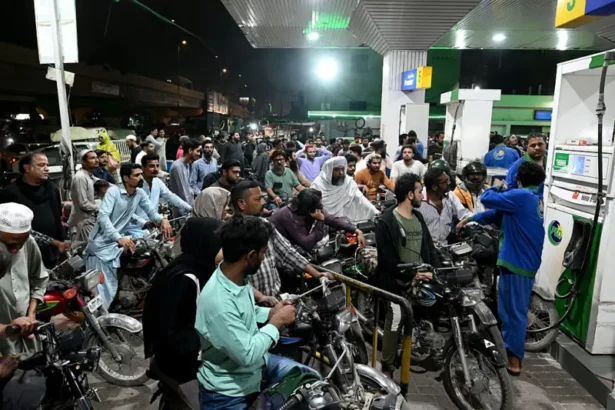

Global oil prices are rising sharply due to escalating tensions in the Middle East, creating fresh pressure on international energy markets. The situation has worsened after disruptions in the Strait of Hormuz and attacks on oil and gas facilities in Qatar, Kuwait, and Bahrain, pushing crude oil prices to around $110–$120 per barrel.
Experts warn that these developments could have serious consequences for Pakistan’s economy. As fuel prices increase, inflation in the country is expected to rise significantly. Analysts estimate that inflation could increase by at least 6%, while in a worst-case scenario it may exceed 12%.
A report by the Pakistan Institute of Development Economics highlights that the closure of the Strait of Hormuz has intensified inflationary pressures and added to external financial challenges. The disruption of a key global oil route, through which around 20 million barrels of oil pass daily, has created volatility in energy markets and driven prices upward.
Prime Minister Shehbaz Sharif has acknowledged the risks and urged the public to conserve fuel. He emphasized the need for austerity measures to deal with possible supply disruptions. In a high-level meeting attended by senior military leadership, the government reviewed the situation and discussed steps to manage potential shortages.
Pakistan’s heavy reliance on imported energy makes it particularly vulnerable. Around 22% of its total imports consist of crude oil and petroleum products. However, local fuel prices are influenced not only by global oil rates but also by rising transportation costs, currency fluctuations, and taxation policies.
The report notes that during crises, shipping and freight costs increase significantly, while insurance premiums also rise. These additional costs further raise fuel prices at the domestic level, increasing the burden on consumers.
Three possible scenarios have been outlined for Pakistan’s economy. In a mild case, inflation could exceed 8% within the next six months. Under moderate pressure, it may rise above 10.4%. In a severe crisis, inflation could surpass 12%, placing significant strain on households and businesses.
The financial impact could also be substantial. Pakistan may need to pay an additional $380 million in a single month for fuel imports, which could turn the current account surplus into a deficit. If the situation persists, the annual external deficit may reach up to $4.6 billion.
A weakening Pakistani rupee is another likely outcome. Higher import costs would further fuel inflation, making essential goods more expensive. Rising high-speed diesel prices would increase transportation costs, which would directly affect the prices of food and other daily necessities.