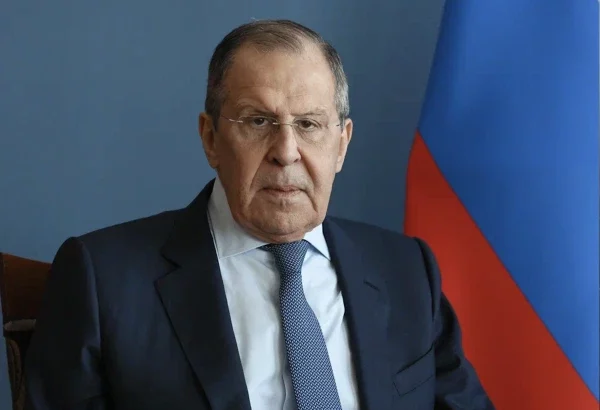

Russia’s Foreign Minister Sergey Lavrov issued a stern warning on Monday, saying that agreements imposed through force cannot bring lasting peace to the Middle East. Speaking amid ongoing U.S. airstrikes on Iran, Lavrov criticized what he described as a return to the “law of power,” where stronger nations dictate terms while weaker states bear the consequences.
“In the Middle East, as in other sensitive regions, forcing decisions or imposing deals through pressure will only destabilize the area further,” Lavrov said in a statement shared by Russian state media. “Sustainable peace cannot be achieved through coercion or military might.”
The Russian minister accused the United States of prioritizing its own interests above global stability. He highlighted Washington’s pursuit of energy resources in countries such as Venezuela and Iran, while European nations face energy shortages and economic strain as a result. “Policies focused solely on national gain are undermining the global balance,” Lavrov said.
Lavrov’s comments come as tensions in the Middle East have escalated into a wider conflict affecting energy markets, international diplomacy, and regional security. He argued that these developments illustrate the dangers of a unilateral approach that relies on threats, military strikes, or coercive agreements rather than dialogue.
“Global disputes should be resolved through negotiations and diplomacy, not through the application of force,” Lavrov emphasized. “Only through constructive dialogue can long-term peace and stability be secured in such a strategically vital region.”
Analysts say Lavrov’s statement reflects Russia’s growing frustration with U.S. actions in the Middle East, including support for military interventions and economic sanctions. Moscow has repeatedly called for multilateral solutions that respect the sovereignty of all nations and aim to de-escalate tensions.
The Foreign Minister also pointed out the broader implications of energy politics. According to him, when global powers seek to control resources, regional economies and international markets suffer. Europe, in particular, has been affected by high energy costs and supply challenges as a consequence of strategic maneuvers in the Middle East and Latin America.
Lavrov concluded by urging the international community to prioritize diplomacy over military pressure, warning that the use of force to enforce agreements only increases instability and threatens global security. His remarks underline Russia’s position as a vocal critic of unilateral interventions and as an advocate for dialogue in conflict zones worldwide.