
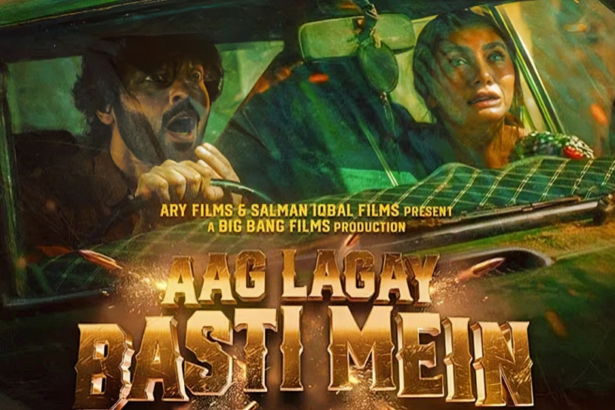

Watching Agg Laga Basti Mein becomes more meaningful when the film is approached not only as a story, but as a product shaped by industrial realities, technical limitations, and evolving cinematic ambition. Much like post-screening discussions that reveal the invisible layers of filmmaking, this film invites the viewer to look beyond what appears on screen and consider how budget, production design, performance, and technical execution come together to construct meaning.
One of the most striking aspects of Agg Laga Basti Mein is its relationship with budget and production economy, which quietly shapes nearly every creative decision. Unlike highly structured film industries where financial planning stabilizes production, this film reflects a more flexible and sometimes uncertain funding model. There is a visible sense that resources are carefully allocated, and this directly influences the scale of scenes, the number of locations, and the level of technical polish. Rather than expansive set pieces or elaborate visual effects, the film relies on focused environments and contained storytelling, allowing narrative urgency to replace spectacle. This does not weaken the film; instead, it reveals how Pakistani cinema often negotiates between ambition and limitation, creating meaning within constraint.
The cinematography of Agg Laga Basti Mein supports this approach by adopting a visual style that feels grounded and immediate. The camera frequently works within tight spaces, capturing the density of the environment rather than attempting to expand it artificially. Lighting appears practical rather than heavily stylized, suggesting that the filmmakers prioritized accessibility and efficiency overelaborate setups. While this sometimes leads to inconsistency in tonal quality across scenes, it also creates a sense of realism. The visuals do not feel overly constructed; they feel lived-in. This approach aligns with a broader trend in emerging cinemas, where storytelling authenticity often replaces aesthetic perfection.
Dialogue and performance play a central role in maintaining engagement. The film relies heavily on spoken expression, with characters articulating emotions and conflicts directly. This is consistent with mainstream South Asian storytelling traditions, where dialogue carries narrative weight. Performances, particularly by experienced actors, demonstrate emotional intensity and familiarity, though at times they reflect theatrical influences rather than subtle cinematic restraint. This balance between accessibility and depth allows the film to connect with a wide audience, even if it occasionally limits interpretive space for viewers seeking nuance.
Costume and production design further reinforce the film’s commitment to realism. Rather than functioning as symbolic or stylized elements, costumes serve to establish character identity and socio-economic context. The visual world of the film is built through recognizable textures and environments, rather than constructed spectacle. This choice strengthens authenticity, but it also highlights the limitations of production scale. Unlike films where costume and design contribute to layered metaphor, here they remain closely tied to narrative function.
The narrative structure itself reflects a sense of urgency. Events unfold in a relatively direct and linear manner, with limited pauses for reflection. This pacing appears closely connected to production realities, where time constraints often shape storytelling decisions. The film prioritizes movement and clarity, ensuring that audiences remain engaged, but it occasionally sacrifices depth and ambiguity. Unlike slower, contemplative cinema that invites viewers to sit with silence, Agg Laga Basti Mein moves forward with purpose, maintaining momentum even in emotionally intense moments.
Sound and music play a significant role in supporting this structure. The film uses music as an emotional guide, helping to reinforce mood and signal transitions. In many scenes, sound compensates for visual limitations, adding depth and intensity where the image remains simple. While this approach is effective in maintaining engagement, it can also feel instructive, directing the audience’s emotional response rather than allowing it to emerge organically. This reflects a broader tendency in commercial cinema, where sound becomes a tool for narrative clarity.
The use of graphics and visual effects in the film reveals an industry in transition. While not heavily dependent on digital technology, the film incorporates selective enhancements where necessary. These moments indicate an awareness of global cinematic standards, even if execution remains uneven. Limitations in budget, time, and infrastructure are evident, yet the attempt to integrate digital elements signals a growing ambition within Pakistani filmmaking. It suggests that the industry is gradually moving toward more technologically integrated workflows, even if consistency has not yet been achieved.
From a technical perspective, Agg Laga Basti Mein reflects a hybrid production model. Traditional filmmaking practices coexist with emerging digital processes, resulting in a workflow that is functional but not fully standardized. This lack of industrial continuity becomes visible in the film’s structure, where different elements occasionally feel disconnected. However, this fragmentation also highlights the adaptability of filmmakers working within evolving systems. The film becomes not just a narrative, but a record of an industry learning to balance creativity with available resources.
Another important aspect is the film’s positioning within a broader regional context. Compared to more structured industries, such as Turkish cinema, Pakistani productions often operate without consistent financial backing or institutional support. This difference influences everything from pre-production planning to post-production execution. While structured industries benefit from established pipelines and long-term investment, films like Agg Laga Basti Mein rely on project-based coordination, where each film builds its own system. This creates variability, but it also fosters resilience and experimentation.
At its core, the film’s narrative and technical elements are tied together by a sense of intensity—reflected in its title itself. The idea of “fire” extends beyond the storyline and becomes a metaphor for the filmmaking process. It represents urgency, instability, and transformation. The film captures a moment where ambition pushes against limitation, where creative intent strives to exceed available means. This tension gives the film its energy, even when execution is not fully refined.
What ultimately stands out is the film’s ability to function on multiple levels. For general audiences, it offers a direct and emotionally engaging story. For those interested in filmmaking, it provides insight into the realities of production within a developing cinematic ecosystem. Much like reflective discussions that follow meaningful screenings , the film encourages viewers to think about process, not just product.
By the end, Agg Laga Basti Mein leaves an impression not because it achieves perfection, but because it reveals effort, negotiation, and growth. It shows how cinema in Pakistan continues to evolve—balancing storytelling traditions with modern expectations and working toward greater technical and industrial maturity. The film becomes more than entertainment; it becomes a point of reflection on where the industry stands and where it might go.
In this sense, Agg Laga Basti Mein is not just a film to be watched, but a film to be understood.