
KYIV: Four years after suffering a devastating defeat in Mariupol, Ukraine’s Azov unit has re-emerged as a powerful and expanded fighting force, now carrying out coordinated drone and strike operations against Russian positions in occupied territory.
The unit, which was forced to surrender in May 2022 after a brutal siege that killed and captured hundreds of its fighters, has transformed into a larger corps integrated within Ukraine’s National Guard. Once known for its defence of Mariupol, Azov is now actively targeting Russian logistics and supply routes across eastern Ukraine.
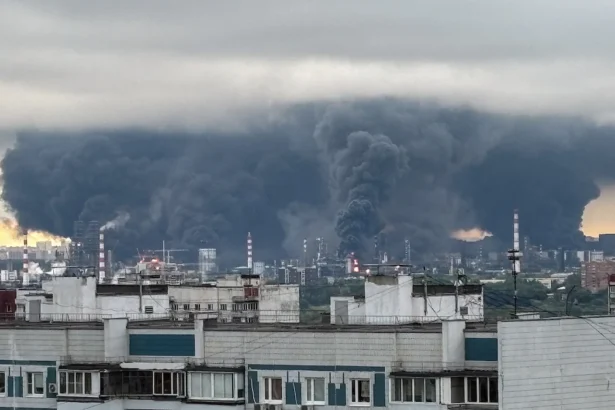
Recently, drones linked to the Azov Corps took part in an operation near Mariupol’s strategic port area, hitting electrical substations, repair sites and a sanctioned vessel. The strikes reportedly caused a temporary blackout in parts of the port region, highlighting Ukraine’s expanding long-range drone capabilities.
Military officials say these operations are part of a wider Ukrainian strategy to disrupt Russian supply chains deep behind the front lines. Key transport routes, including highways connecting Mariupol to Donetsk and Russia, have become frequent targets in an effort to weaken Moscow’s military logistics.
Azov leadership has indicated that such operations will continue and intensify. Senior officers say the corps is preparing for sustained, long-term pressure on Russian positions, with dozens of similar missions planned in the future.
The unit has also signalled that Mariupol remains a symbolic and strategic objective. Although Russia currently controls the city and has initiated reconstruction projects there, Ukrainian commanders describe its recapture as a long-term goal that may take years of planning.
Azov’s drone warfare capability has become central to its operations. The corps reportedly uses advanced systems, including AI-assisted drones, which have been modified for extended range and battlefield flexibility. These technologies have significantly improved Ukraine’s ability to strike targets far from the front line.
Military analysts say these attacks are not necessarily decisive on their own but are gradually weakening Russian operational capacity by forcing longer supply routes, reducing mobility, and increasing logistical strain.
Ukraine’s broader strategy includes parallel strikes across occupied southern regions, including efforts to disrupt the land corridor connecting Russia with Crimea. Officials in Kyiv believe sustained pressure on transport infrastructure could eventually reshape battlefield dynamics.
The Azov Corps, now expanded into multiple brigades and specialist drone units, is considered one of Ukraine’s most technologically advanced formations. Its leadership says the ultimate goal is not only battlefield success but also the release of hundreds of captured fighters still held in Russian prisons.
Despite controversy surrounding its origins, Azov is now widely recognised in Ukraine as a key component of its modern military structure. Its evolution from a volunteer battalion into a structured corps reflects the broader transformation of Ukraine’s armed forces during the ongoing war.
Military observers suggest that while Russia continues offensive operations in parts of Donetsk, the pace of its advances has slowed in recent months, partly due to Ukraine’s increasing focus on deep-strike and drone warfare tactics.