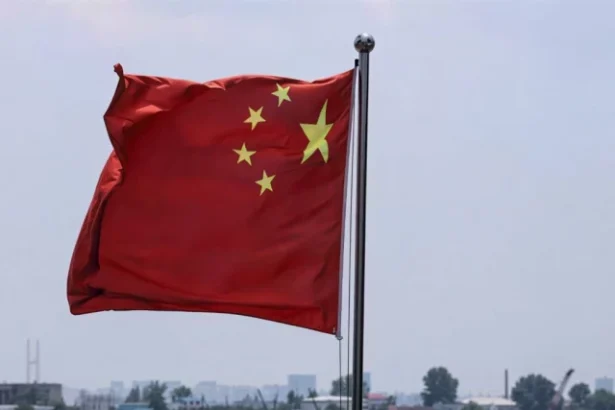

China imposed a temporary ban on helium exports on Friday, taking effect immediately, as renewed military conflict in the Middle East raises fears of another shortage of a gas that plays a critical role in semiconductor manufacturing.
The move comes months after the earlier US Israeli war against Iran already triggered a wave of helium shortages that disrupted companies around the world, including firms in China, where the artificial intelligence sector increasingly depends on domestically produced chips to train and operate AI systems. Manufacturers rely on helium to manage heat during chip production, making it an essential input for the semiconductor supply chain.
The export restriction fits a broader pattern of Beijing moving to shield its domestic economy from shortages of critical materials by limiting shipments abroad. China has previously imposed comparable export controls on fuel, fertilizers and sulfuric acid, using similar justifications tied to protecting domestic supply during periods of global instability.
China’s leadership has simultaneously pushed to expand the country’s own semiconductor manufacturing capacity, an effort aimed at reducing the industry’s dependence on advanced chips produced by companies like Nvidia, which remain subject to strict export controls imposed by Washington.
Despite years of effort to boost domestic helium production, China continues to rely overwhelmingly on imported supplies to meet its needs. Analysts estimate that the country imports roughly 85 percent or more of the helium it consumes each year. Qatar has emerged as one of the world’s largest helium producers and has supplied more than half of China’s helium imports in recent years.
The new export ban carries implications that extend well beyond China’s own borders, since Chinese companies have increasingly functioned as intermediaries in the global helium trade. These firms import helium from Russia and then re export a portion of those volumes to buyers in other regions, including Europe. Friday’s restriction threatens to disrupt that flow and could tighten global helium availability at a moment when Middle East tensions already threaten established supply routes.
Helium differs from many industrial gases because producers cannot rapidly scale up output to meet sudden demand spikes. The gas comes from natural gas fields that contain unusually high helium concentrations, and no alternative industrial process exists that can generate meaningful volumes quickly. This structural limitation means that any disruption to established supply chains tends to have outsized effects on global markets, since new sources cannot come online fast enough to offset a shortfall.