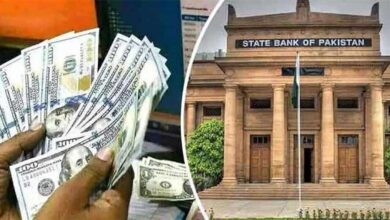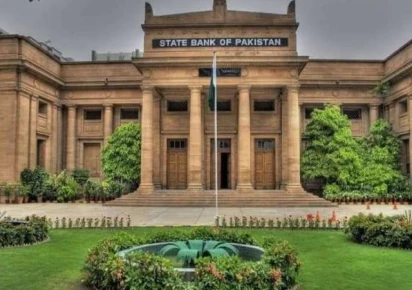

The State Bank of Pakistan (SBP) injected around Rs11.6 trillion into the country’s banking system through an open market operation on Monday, providing significant liquidity to banks.
The central bank conducted a reverse repo auction under its Open Market Operations (OMOs). Banks submitted bids worth Rs11.777 trillion across two different tenors.
The SBP accepted Rs11.613 trillion in total.
For the four-day tenor, banks offered Rs31 billion. The central bank accepted the entire amount at an interest rate of 11.54%. The bids in this category ranged between 11.56% and 11.54%.
The 14-day tenor attracted much larger demand. Banks submitted offers worth Rs11.746 trillion. The SBP accepted Rs11.583 trillion at a cut-off rate of 11.51%.
The bidding rate for the 14-day facility ranged from 11.57% to 11.51%. Of the Rs5.6527 trillion offered specifically at 11.51%, the central bank accepted Rs5.48415 trillion on a pro-rata basis.
The large-scale liquidity injection comes as banks continue to manage their short-term funding requirements. Open market operations are among the SBP’s key tools for managing liquidity and maintaining stability in the financial system.
Meanwhile, the Pakistani rupee recorded a slight improvement against the US dollar during Monday’s trading session.
The rupee strengthened by three paisa, closing at Rs277.62 per dollar compared with the previous close of Rs277.65. The marginal gain reflected relative stability in the foreign exchange market.
The US dollar index also declined by 0.1%. The index, which measures the dollar against six major international currencies, traded near its lowest level of the month at 99.519.
Gold prices, meanwhile, moved sharply higher in Pakistan.
The price of gold increased by Rs2,000 per tola to reach Rs461,936. The price of 10 grams also rose by Rs1,715 to Rs396,035, according to market rates.
The increase followed a strong recovery in international bullion prices. Gold has gained around 9% in August and was trading near $4,400 an ounce.
Market analysts said the recent recovery suggested renewed interest from institutional investors and central banks.
The rebound has also pushed gold above key technical resistance levels. This has strengthened expectations that prices could move higher if buying momentum continues.
Gold had faced heavy pressure following the escalation of the US-Israel conflict with Iran. International prices fell from a record level of around $5,595 an ounce in January to below $4,000 in June.
The decline prompted some investors to raise cash. Some central banks also used reserves to support their domestic economies as oil prices surged.
Analysts now believe renewed central bank purchases could support the precious metal. Institutional investors are also rebuilding their holdings after the earlier sell-off.