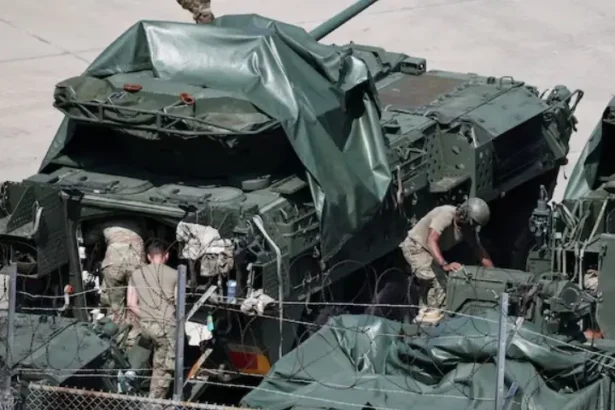

SEOUL: The United States and South Korea have shortened their annual joint military exercises by nearly a week after US President Donald Trump criticised the drills and ordered them scaled back, in a move that could open fresh space for diplomacy with North Korea.
The Ulchi Freedom Shield (UFS) exercises began on August 17 and were originally scheduled to continue until August 27. South Korea’s military said on Wednesday that the drills would instead conclude on August 21, with the second phase of the exercise now understood to have been cancelled.
South Korea’s Joint Chiefs of Staff said the decision followed a suggestion from the US side. The Pentagon described the exercises as “substantially reduced” but said they would still maintain essential military readiness and meet US training objectives.
The annual drills are designed to prepare the allies for a potential attack from North Korea. They traditionally include computer simulations and field training aimed at strengthening coordination between South Korean and US forces.
The first phase focuses largely on defensive operations, while the second is centred on a potential counteroffensive. The latter phase, which was expected to run from August 24 to 27, is now understood to have been dropped.
A South Korean military official described the change as unusual.
North Korea, meanwhile, strongly condemned the exercises, calling them an immediate threat to its security. State-run Korean Central News Agency said the drills represented an open danger to North Korea and regional stability.
Notably, Pyongyang did not directly mention Trump’s decision to reduce the exercises or his recent comments about improving relations with North Korean leader Kim Jong Un.
Analysts said that silence may have been deliberate. Hong Min of the Korea Institute for National Unification said North Korea appeared to be avoiding any suggestion that it had responded positively to Trump’s move, potentially keeping the issue available as a bargaining point in future negotiations.
Trump had described the drills as “inappropriate and hostile”, arguing that his relationship with Kim had helped make the situation safer. He has also indicated that communication with the North Korean leader has taken place, although details remain unclear.
South Korean Foreign Minister Cho Hyun told lawmakers that Seoul had not been informed beforehand about Trump’s decision to scale back the exercises, suggesting that the move caught parts of the South Korean government off guard.
The development comes amid speculation that Washington could seek renewed talks with Pyongyang. Analysts believe reducing military exercises could remove one of North Korea’s longstanding objections to negotiations.
The United States maintains about 28,500 troops in South Korea, a key component of Seoul’s defence against the North.
Trump and Kim held three meetings during Trump’s first presidency, but no formal summit has taken place between the two leaders during his second term.