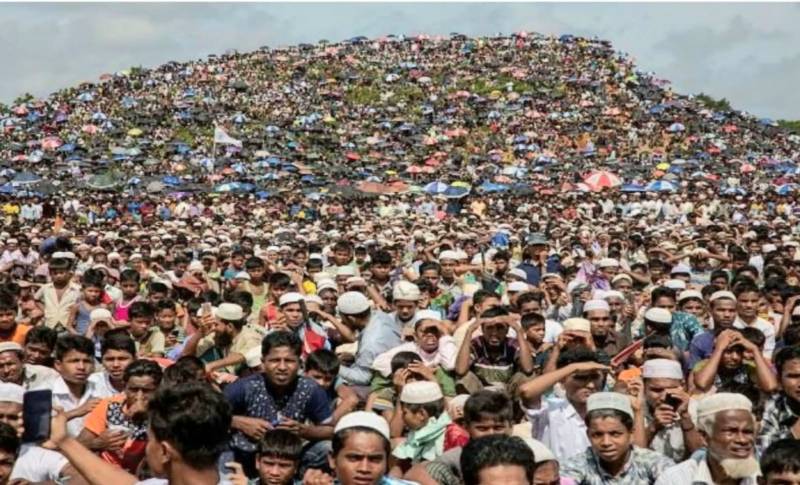

Nine years after hundreds of thousands of Rohingya fled violence in Myanmar and crossed into Bangladesh, their repatriation remains stalled, with experts calling for stronger international pressure and coordinated efforts to build global support for a durable solution.
The Rohingya crisis entered its ninth year on Tuesday, marking the anniversary of the mass exodus that began on August 25, 2017, when nearly 750,000 Rohingya fled Myanmar’s Rakhine State following a military crackdown.
The operation followed attacks on security posts in Rakhine State and was accompanied by widespread killings, sexual violence and the burning of villages, forcing hundreds of thousands of people to seek refuge in Bangladesh, particularly in Cox’s Bazar.
Bangladesh has since faced growing humanitarian, economic and security pressures while efforts to send the refugees back to Myanmar have repeatedly failed.
According to the latest information attributed to Myanmar’s Foreign Ministry, Dhaka submitted a list of 828,824 Rohingya for verification as of July 31. Myanmar authorities confirmed 308,797 of them as residents of Rakhine State.
Myanmar, however, has said conditions are not currently suitable for their return because of continuing fighting between the military and the Arakan Army and related security concerns.
International relations analysts say Bangladesh needs to intensify diplomatic efforts to shape international public opinion and secure stronger regional and global engagement to make repatriation possible.
Experts have also suggested considering temporary relocation arrangements, with regional and international assistance, as a way of easing pressure on Bangladesh while efforts continue for a permanent solution.
Bangladesh and Myanmar made preparations for repatriation in 2018 and again in 2019, but neither attempt resulted in the return of Rohingya refugees.
Nine years into the crisis, a new generation of Rohingya children has also grown up in refugee camps in Bangladesh without having experienced life in Myanmar, highlighting the prolonged uncertainty surrounding their future.