
Federal Minister for Planning and Development Ahsan Iqbal has said Pakistan must move beyond economic stabilisation and focus on sustainable growth, higher productivity, export expansion, investment and creating more employment opportunities.
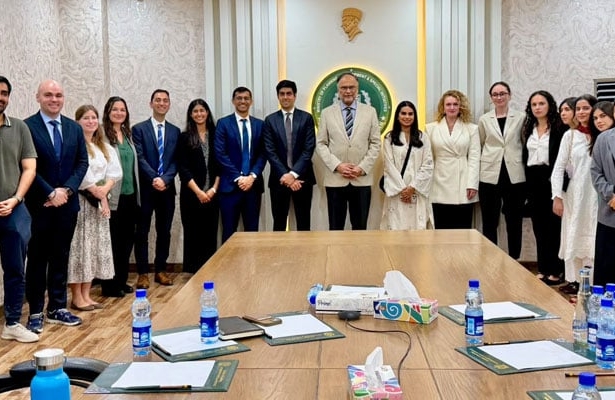
Speaking during a meeting with MBA students from Harvard Business School at the Ministry of Planning and Development, Iqbal said Pakistan’s key economic challenge now lies in transforming the structure of the economy rather than simply maintaining stability.
He urged a broader view of Pakistan’s economic potential, highlighting the country’s population of around 260 million, large young workforce, strategic geographic location, agricultural and mineral resources, growing digital economy and Pakistani diaspora worldwide. According to him, these strengths can provide a strong foundation for long-term economic transformation.
Iqbal said Pakistan must break away from its recurring cycle of rapid economic expansion, pressure on external accounts, stabilisation measures and subsequent slowdown. He stressed that the country needs to build its economic base around greater production and stronger exports.
Briefing the students on the government’s comprehensive national development framework, “Uraan Pakistan”, the minister said its key priorities include exports, business and employment, digital transformation, environmental protection, climate resilience, food and water security, energy and infrastructure. The framework also focuses on equality, ethics and empowerment.
Iqbal said Pakistan has set a target of becoming a $1 trillion economy by 2035. However, he stressed that the goal goes beyond achieving a larger GDP figure. Pakistan must develop the capacity to produce competitive goods and services for international markets that it does not currently offer.
“True development means building national capabilities,” Iqbal said, adding that productivity, quality and innovation will determine Pakistan’s competitiveness in the global economy. He said the government wants to promote a national culture centred on these three areas and strengthen the reputation of Pakistani products in international markets.
Highlighting the importance of human capital, the minister said Pakistan’s people represent its greatest asset. He warned that the country’s large young population could become an economic burden if young people do not receive quality education, proper nutrition, healthcare, technical skills and adequate employment opportunities.
Discussing artificial intelligence, Iqbal described emerging technologies as a major opportunity for developing economies. He warned that countries that fail to build technological expertise could fall behind in the emerging global distribution of intelligence and innovation.
He said Pakistan must move beyond simply consuming new technologies and develop the ability to create and adapt them according to local needs. He called for stronger technological and research capabilities in areas including artificial intelligence, biotechnology, advanced manufacturing, agriculture and space sciences.
On climate change, Iqbal said Pakistan’s experience has demonstrated that the issue extends far beyond the environment. Climate-related challenges can directly affect financial stability, food security, infrastructure, public health and poverty, making climate resilience an essential part of the country’s long-term economic strategy.