
KATHMANDU: Nepal intensified rescue operations on Monday as teams, assisted by Chinese and Indian specialists, worked to reach hundreds of people believed to be trapped inside tunnels at hydropower projects following last week’s devastating Himalayan floods.
The massive flood struck the Nepal-Tibet border on August 26 after a glacier on Mount Langtang Lirung fractured at an altitude of around 5,200 metres. The collapse triggered an avalanche of ice and rocks, which developed into a huge flow of mud, water and debris and swept through valleys on both sides of the border.
Nepali authorities said the disaster had killed 903 people, while 4,247 remained missing. Among those unaccounted for were 933 workers believed to be trapped at 11 hydropower projects in the badly affected districts of Rasuwa and Nuwakot. Many of the workers were believed to be inside tunnels that had been blocked by large amounts of mud, rocks and water.
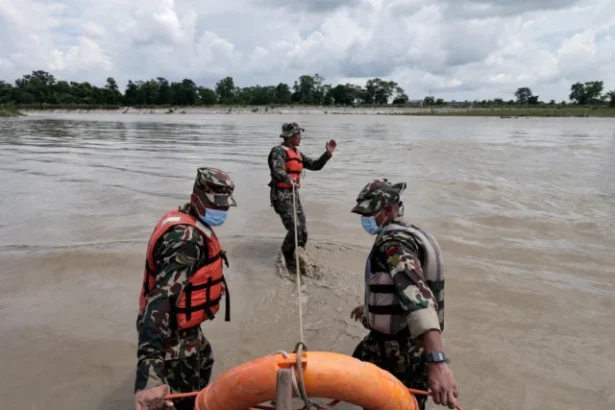
Rescue teams have been working around the clock to clear the blocked passages. Images released by rescue workers showed excavators and other heavy machinery removing piles of mud and debris under powerful lights during nighttime operations. Soldiers were also seen using torches while searching a large excavation for possible access to one of the tunnels.
The Nepal Army said teams were using controlled explosions, excavators and searchlights to remove water, rocks and mud from the affected areas. Rescuers managed to recover three bodies after entering two tunnels, while several other sections remained buried and continued to be searched.
Nepal Army spokesperson Raja Ram Basnet said the enormous quantity of debris inside the tunnels had made the operation particularly difficult. He said rescuers were concentrating primarily on clearing the tunnels so they could reach anyone who might still be alive.
The disaster has also affected communities across the border in China. Chinese authorities reported 16 deaths in Gyirong County, while 546 people were still missing. Beijing also said 261 foreign nationals from 23 countries were unaccounted for in Tibet near an important border crossing with Nepal.
Chinese Foreign Ministry spokesperson Guo Jiakun said nearly 100 Chinese citizens on the Nepali side could not currently be contacted. China has sent tunnel specialists to assist with rescue operations and has also provided emergency financial and humanitarian assistance to Nepal.
The Red Cross estimated that more than 90,000 people may have been affected by the disaster. Rescue operations have repeatedly faced delays because of poor weather and concerns over additional flooding and landslides.
Authorities are particularly worried about a lake formed near the Nepal-China border after the disaster. Its overflowing water could cause further flooding in rivers downstream. Chinese state television also reported that glaciers near the area affected by the collapse remained unstable and could trigger additional landslides or the formation of new lakes.
The disaster has highlighted Nepal’s vulnerability to climate-related hazards. China has linked the flood to the long-term effects of global warming, while Nepali officials have raised concerns about the limited sharing of information regarding glacier conditions and water levels.
The flood caused widespread destruction across Rasuwa, Nuwakot, Dhading, Kavre and the Kathmandu Valley in Nepal, while the Gyirong border area in China was also severely affected. Rescue teams continue to search for survivors as authorities assess the full scale of the damage.