
Pakistan has told the United Nations Security Council that it will take measures in self-defence against terrorist threats originating from Afghanistan whenever necessary, while remaining within the bounds of international law.
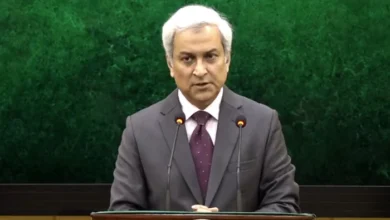
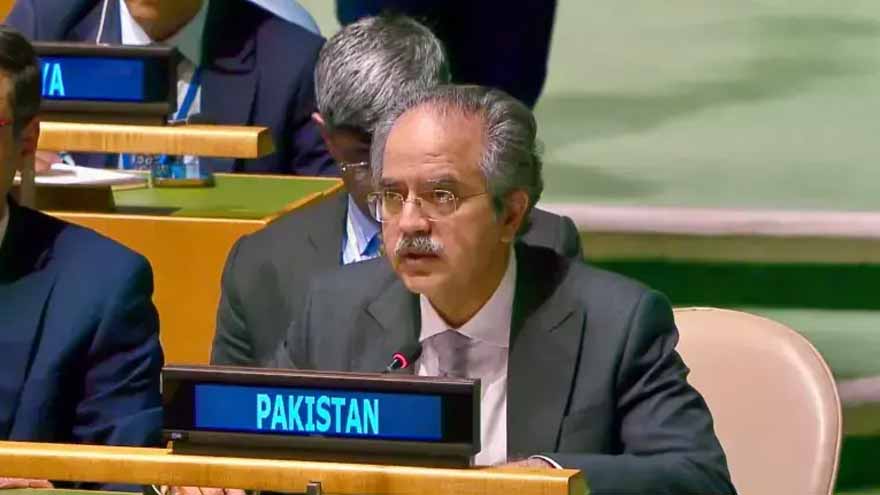
Speaking at a Security Council session on Afghanistan, Pakistan’s Permanent Representative to the UN, Ambassador Asim Iftikhar Ahmad, said Islamabad could not remain passive in the face of continuing terrorist threat.
“Pakistan cannot sit idle in the face of this terrorist onslaught,” Ahmad said, adding that the country would respond when required to protect its citizens and national security.
The Pakistani envoy said more than 4,700 Pakistanis had been killed in terrorism linked to Afghanistan over the past three years. He also accused the authorities in Kabul of failing to take “concrete and verifiable” measures against militant groups operating from Afghan territory.
Asim Iftikhar Ahmad said that Afghanistan had once again become a haven for several militant organisations, including the banned Tehreek-i-Taliban Pakistan (TTP), Baloch Liberation Army and its Majeed Brigade, Islamic State-Khorasan and the East Turkestan Islamic Movement, along with their affiliated groups.
He also stated that outside actors were supporting proxy groups operating from Afghanistan against Pakistan and other neighbouring states.
A recent report by UN Secretary General Antonio Guterres said terrorist organisations continued to operate in Afghanistan. The report also highlighted concerns over restrictions on women and girls, exclusionary governance, economic difficulties, weakened public services and large-scale migration and returns.
Ahmad said Pakistan had continued to support Afghanistan through diplomatic engagement, humanitarian assistance and regional cooperation despite its concerns over Taliban policies.
He said Pakistan had honoured its international obligations by facilitating humanitarian assistance to Afghanistan, noting that at least 687 humanitarian cargo trucks crossed into Afghanistan from Pakistan during the reporting period covered by the UN report.
However, he said expectations that followed the Taliban takeover five years ago had gradually given way to disappointment within the international community.
Ahmad described terrorism as being at the heart of Afghanistan’s challenges and said that links between the Taliban and militant organisations had contributed to the problem. He also warned about the proliferation of weapons left behind by foreign forces and the growth of illegal arms trafficking.
The United States also adopted a critical stance towards the Taliban during the meeting.
US Ambassador Mike Waltz condemned the detention of American citizens by the Afghan authorities and accused the Taliban of using them as leverage. He urged the Security Council to demand their release.
Waltz also raised concerns about arbitrary arrests, torture, mistreatment and extrajudicial killings, as well as the Taliban’s restrictions on women and girls.
He pointed to the continuing prohibition on girls’ education beyond the sixth grade and restrictions affecting Afghan women working for the United Nations.
The US envoy questioned whether continued international engagement with the Taliban could produce meaningful changes without concrete action.