

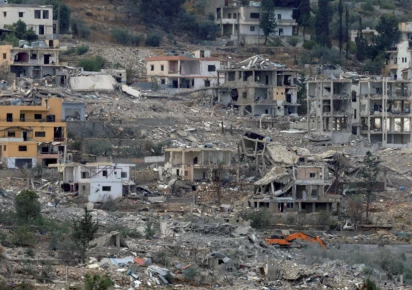

Israeli artillery shelling targeted several areas across southern Lebanon on Wednesday, including towns in the western sector and the Bint Jbeil district, raising fresh concerns over the fragile security situation along the border.
The Lebanese state news agency NNA reported that intense artillery fire struck the towns of Mansouri and Majdal Zoun in southern Lebanon’s western sector, while machine-gun fire was directed towards Beit al-Sayyad.
Additional artillery strikes targeted the outskirts of Haddatha and Baraachit, while the Al-Araish area between Haris and Haddatha in the Bint Jbeil district also came under fire.
Earlier in the morning, Israeli artillery had struck the outskirts of Shaqra and Wadi al-Salouqi, according to the report.
There were no immediate reports of casualties or damage from Wednesday’s attacks.
The latest shelling comes amid continuing tensions along the Lebanon-Israel border, despite diplomatic efforts aimed at reducing hostilities and establishing lasting security arrangements.
Diplomatic efforts continue amid attacks
Lebanon and Israel have been engaged in US-led negotiations since March to address security arrangements along their shared border, end Israeli attacks on Lebanese territory and resolve issues related to Israel’s continued occupation of Lebanese land.
However, repeated reports of artillery fire and other military activity have raised questions about the effectiveness of diplomatic efforts to stabilise the situation.
Last month, Israeli forces reportedly used phosphorus munitions while shelling several towns in southern Lebanon, according to NNA.
The attacks targeted the outskirts of Zawtar al-Sharqiyah, Mayfadoun and Nabatieh al-Fawqa in the Nabatieh district. The report said phosphorus shells were used in Nabatieh al-Fawqa, while subsequent attacks on Zawtar al-Sharqiyah involved similar munitions.
In the Tyre district, artillery fire also struck Wadi Zibqin and the outskirts of Haris and Haddatha.
The reports have added to concerns about the risks faced by civilians in communities near the border, where repeated attacks have damaged homes and disrupted daily life.
Unexploded bombs add to security concerns
The threat from unexploded ordnance has also remained a concern.
Lebanese army specialists dismantled two unexploded Israeli aerial bombs in Majdal Selm and Al-Ghandouriyah, located in the Marjayoun and Bint Jbeil districts, respectively, according to the report.
The bombs were subsequently moved to a safe location.
Such unexploded weapons pose continuing dangers to residents, particularly in areas affected by repeated airstrikes and artillery bombardment.
Thousands killed as displacement grows
The broader conflict has exacted a heavy toll on Lebanon’s population.
According to Lebanese authorities, Israeli military operations since early March have killed at least 4,386 people, wounded 12,407 and displaced more than one million others.
The attacks have also contributed to widespread destruction and heightened humanitarian concerns in affected communities.
The latest shelling has continued despite a framework agreement reached in June that envisages a gradual Israeli withdrawal from occupied Lebanese territory in exchange for the deployment of the Lebanese army and the disarmament of Hezbollah.
The agreement was intended to establish more stable security arrangements and reduce the risk of renewed conflict.
However, continued artillery fire across southern Lebanon underscores the challenges facing diplomatic efforts.
With several communities reporting fresh attacks, residents remain exposed to the threat of further violence as negotiations continue and the implementation of the framework agreement remains critical to securing a more lasting calm along the border.