

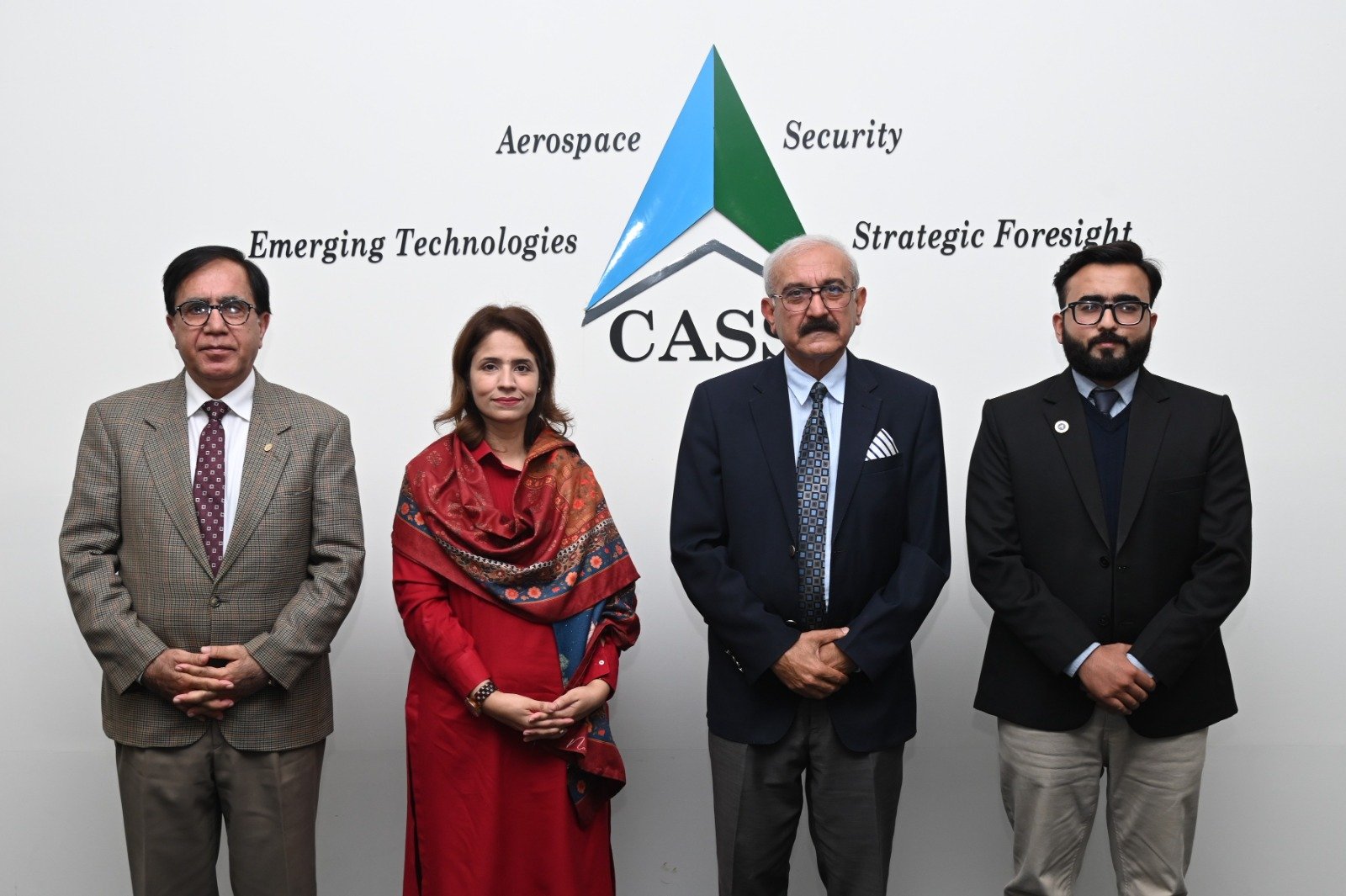

ISLAMABAD: Experts at a policy forum hosted by the Centre for Aerospace & Security Studies (CASS) have called for a comprehensive, sustained diplomatic approach toward Afghanistan, cautioning that reliance on hard power alone cannot resolve lingering cross-border security and bilateral challenges.
The discussion took place during a CASS Catalyst Conversation held on November 17, titled “Afghanistan, A Decade Ahead: Stability, Fragmentation or Strategic Reorientation? Implications for Pakistan & the Region.” The forum evaluated Afghanistan’s political, security, and economic trajectory over the next decade and its strategic fallout for Islamabad and the wider region.
Moderating the session, Director CASS Air Vice Marshal Khawar Hussain (Retd) framed the debate around the widening gap between Pakistan’s initial expectations following the Taliban’s return to power in August 2021 and the subsequent strain in bilateral ties. Pointing to persistent security threats—most notably from the Tehreek-e-Taliban Pakistan (TTP)—he stressed the urgency of calibrating diplomatic, security, and regional policy responses within a broader strategic framework.
Delivering the keynote address, Dr. Amina Khan, Director of the Centre for Afghanistan, Middle East & Africa (CAMEA) at the Institute of Strategic Studies Islamabad (ISSI), analyzed Kabul’s internal governance alongside its shifting regional posture. She noted that while “Taliban 2.0” has shown selective pragmatism in service delivery as well as agricultural and economic reforms, major deficits remain regarding human and women’s rights.
Dr. Khan also identified gaps in Pakistan’s current policy approach toward Kabul and advocated for a structured bilateral framework encompassing both security concerns and economic cooperation. She argued that the Doha Agreement must be treated as an internationally binding instrument rather than a purely bilateral pact, particularly concerning the Taliban’s obligation to prevent Afghan soil from being used by terrorist groups against neighboring states. Drawing comparisons with how Iran and India manage ties with Kabul, she emphasized that regional states must coexist with neighbors holding differing political ideologies through continuous diplomatic engagement, noting that hard power alone cannot yield durable stability.
Concluding the forum, CASS President Air Marshal Javaid Ahmed (Retd) reiterated the necessity of sustained diplomatic engagement with Kabul that accounts for Afghanistan’s evolving realities. He reaffirmed CASS’s commitment to fostering independent, policy-oriented dialogue on critical national and regional security challenges.