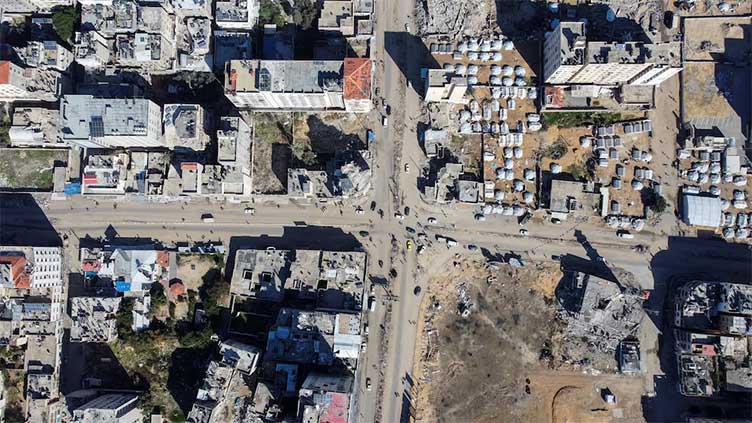

CAIRO: In neighbourhoods levelled by 15 months of war with Israel, Hamas officials are overseeing the clearance of rubble in the wake of Sunday’s ceasefire. The group’s gunmen are guarding aid convoys on Gaza’s dusty roads, and its blue-uniformed police once again patrol city streets, sending a clear message: Hamas remains in charge.
Israeli officials have described a parade of jubilant Hamas fighters that celebrated the ceasefire on Sunday in front of cheering crowds as a carefully orchestrated attempt to exaggerate the Palestinian group’s strength.
But, in the days since the ceasefire took effect, Gaza’s Hamas-run administration has moved quickly to reimpose security, to curb looting, and to start restoring basic services to parts of the enclave, swathes of which have been reduced to wasteland by the Israeli offensive.
Reuters spoke to more than a dozen residents, officials, regional diplomats and security experts who said that, despite Israel’s vow to destroy it, Hamas remains deeply entrenched in Gaza and its hold on power represents a challenge to implementing a permanent ceasefire.
The Islamist group not only controls Gaza’s security forces, but its administrators run ministries and government agencies, paying salaries for employees and coordinating with international NGOs, they said.
On Tuesday, its police and gunmen – who for months were kept off the streets by Israeli airstrikes – were stationed in neighbourhoods through the Strip.
“We want to prevent any kind of security vacuum,” said Ismail Al-Thawabta, director of the Hamas-run Gaza government media office. He said that some 700 police were protecting aid convoys and not a single truck had been looted since Sunday – a contrast to the massive theft of food by criminal gangs during the conflict.
A spokesperson for the United Nations in Geneva confirmed on Tuesday there had been no reports of looting or attacks on aid workers since the ceasefire took effect.
In recent weeks, Israeli airstrikes have targeted lower-ranking administrators in Gaza, in an apparent bid to break Hamas’ grip on government. Israel had already eliminated Hamas’ leadership, including political chief Ismail Haniyeh and the architects of the Oct. 7 attack, Yahya Sinwar and Mohammed Deif.
Despite the losses, Al-Thawabta said the Hamas-run administration continued to function. “Currently, we have 18,000 employees working daily to provide services to citizens,” he said.