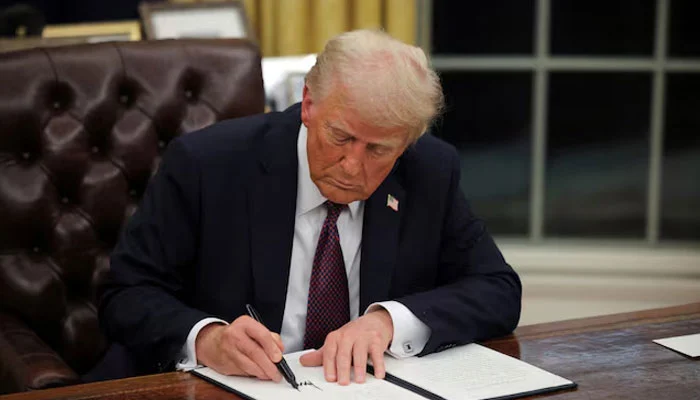

BERLIN/BANGKOK/LONDON: United States President Donald Trump’s decision to freeze foreign aid has rang alarm bells across the globe in light of Washington’s position as the largest humanitarian aid contributor in the world.
Trump last week paused development assistance from the US Agency for International Development for 90 days to assess compatibility with his “America First” policy, setting alarm bells ringing among aid groups around the world that depend on US largesse.
Field hospitals in Thai refugee camps, landmine clearance in war zones, and drugs to treat millions suffering from diseases such as HIV are among the programmes facing the chop in light of the Trump administration’s measure.
Humanitarian organisations and the United Nations agencies say they could face drastic curbs on their ability to distribute food, shelter and healthcare if the freeze becomes permanent.
The US is by far the biggest contributor to global humanitarian aid, supplying an estimated $13.9 billion in 2024, accounting for 42% of all aid tracked by the UN.
Clinics at camps in Thailand providing shelter for about 100,000 refugees from Myanmar were ordered to shut down after the US froze funding to the International Rescue Committee, according to a senior aid worker.
Washington said it would grant waivers to the freeze in some areas including emergency food assistance, according to a memo seen by Reuters.
Bangladesh’s government said in a statement that the US had granted a waiver for emergency food aid to more than a million Rohingya refugees sheltering in Bangladesh.
However, the exemption does not apply to other humanitarian programming. A Bangladesh-based aid worker said organisations working on shelter, for example, would not be able to buy new materials for building and fixing homes for refugees.
The cuts will also affect the supply of lifesaving drugs for HIV, malaria and tuberculosis around the globe, which millions of people depend on, according to another memo seen by Reuters.
On Tuesday, contractors and partners who work with USAID began receiving such memos to stop work immediately.
Disastrous effects
“This is catastrophic,” said Atul Gawande, former head of global health at USAID who left the agency this month. “Donated drug supplies keeping 20 million people living with HIV alive. That stops today.”
The cuts will affect organisations working with 6.5 million orphans and vulnerable children with HIV in 23 countries, Gawande said.