The Sukraraj Tropical and Infectious Disease Hospital in the Nepali capital, Kathmandu, is packed – so packed that in some cases two patients share one bed – as a second COVID-19 wave overwhelms the country’s health infrastructure.
Health experts and front-line medical workers have described the situation as “near-apocalyptic” as they face shortages of hospital beds and oxygen, the national vaccination campaign grinds almost to a halt and the numbers of dead are so high that mass cremations are being held.
“We have been treating patients in every corner of the hospital premises. We are even using the garage to admit as many patients as possible,” said Beli Poudel, a nurse at Sukraraj.
“We do not turn any patient away, we try to accommodate them despite our limited capacity,” Poudel told Al Jazeera, adding that more than 120 COVID-19 patients are being treated in the 104-bed hospital, which has only 24 ICU beds. The hospital, experiencing a huge influx of severely affected patients in the pandemic’s second wave, had already doubled its capacity.
For several weeks now, many of the staff at Sukraraj – the only facility in Nepal specialising in tropical and infectious diseases – have lived in hostels or on hospital premises away from their families.
With just over 21,000 tests on May 19, Nepal logged 8,173 COVID cases and 246 deaths, the highest number recorded since the pandemic broke out last year. Health experts believe the real numbers could be much higher as testing remains low. More than 5,600 people have died since the pandemic began, nearly 2,000 in the past few weeks alone, according to official figures.
The pandemic has particularly affected the Kathmandu Valley and the country’s western lowland bordering the Indian state of Uttar Pradesh. The region is one of Nepal’s least developed, with a large concentration of Indigenous people and ethnic and religious minorities.
Shahbaz Ahmed, a resident of Nepalgunj in western Nepal, lost his three brothers – Zahir, Ejaz and Imtiyaz – to coronavirus in the first week of May.
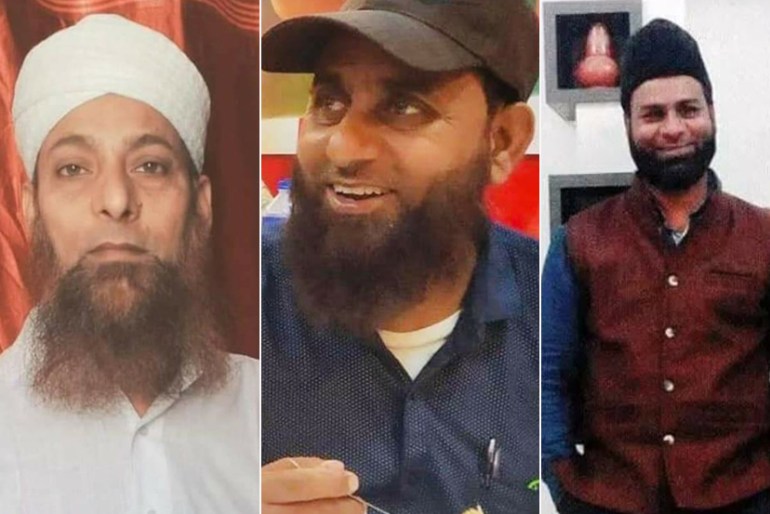 From left: Imtiyaz Ahmed, Ejaz Ahmed and Zahir Ahmed [Courtesy: Shahbaz Ahmed]
All three brothers in their 40s were receiving treatment at Bheri government hospital following health complications.
“The doctors couldn’t save them despite trying their best. Maybe it was Allah’s wish,” Shahbaz told Al Jazeera over the phone.
Zahir, the youngest among seven siblings, was a former member of the under-19 national cricket team. “He (Zahir) was the fittest among all brothers,” Shahbaz said.
Shahbaz, who is mourning in isolation like the rest of his family, rued the crippled health infrastructure.
“I am grateful to health workers because they are risking their lives to save others. But I think the government and politicians aren’t fulfilling their duties,” he said.
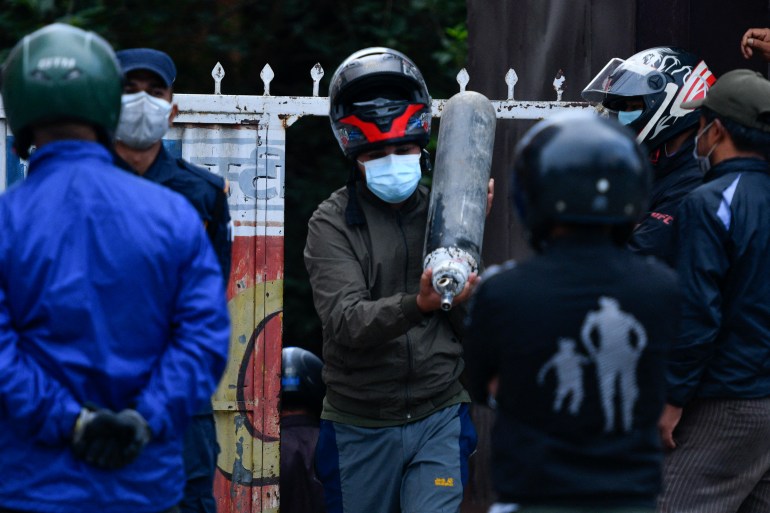 Health experts and front-line medical workers describe the situation as ‘near-apocalyptic’ [File: Prakash Mathema/AFP]
Biren Budhathoki, a resident of Dang in western Nepal, said a delayed diagnosis led to the death of his 38-year-old cousin on May 14.
Most hospitals, except for the large ones in cities, do not have a machine for polymerase chain reaction (PCR) tests, crucial for timely diagnosis and avoiding preventable death.