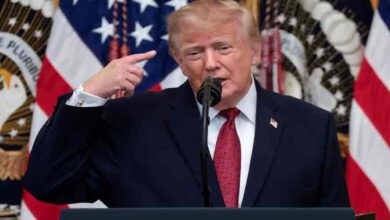
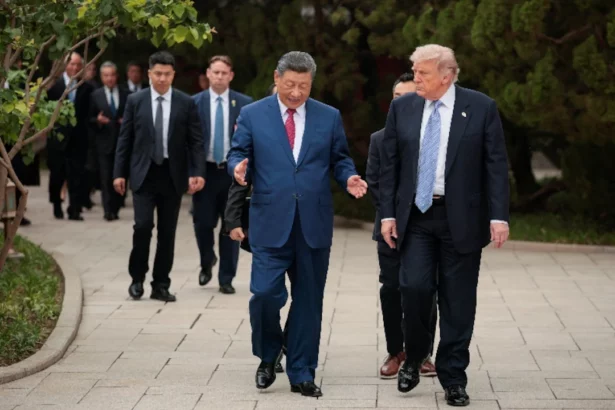

U.S. President Donald Trump has said he and Chinese President Xi Jinping share the view that Iran must not be allowed to develop nuclear weapons, as tensions escalate across the Middle East and the Strait of Hormuz remains largely disrupted.
Speaking after high-level talks in Beijing, Trump said both leaders discussed the Iran conflict alongside wider issues including Taiwan, trade, and regional security. He also claimed Xi expressed opposition to any militarisation of key Gulf waterways and signalled that China would avoid supplying military equipment to Tehran.
China has not confirmed Trump’s account in detail, instead reiterating its position that the conflict “should not have happened” and urging restraint from all sides.
Trump, however, adopted a firmer tone, warning that his patience with Iran is “running out” and insisting Tehran must return to negotiations. He said Iran “needs to make a deal,” while reaffirming that the United States will not accept a nuclear-armed Iran.
The Strait of Hormuz — a critical global energy corridor — has been heavily disrupted since hostilities escalated in February, with Iran effectively restricting much of the shipping traffic in response to U.S. and Israeli military actions. The situation has triggered global concerns over energy security, as a significant share of oil and gas exports normally pass through the waterway.
Iran continues to deny any ambition to develop nuclear weapons, maintaining that its enrichment program is for civilian purposes. However, Washington has repeatedly accused Tehran of advancing toward weapons capability, further deepening tensions.
Diplomatic efforts to end the conflict have stalled, even as third-party mediation attempts continue. Meanwhile, regional instability has expanded beyond Iran, with renewed violence in Lebanon involving Israel and Hezbollah adding pressure to already fragile ceasefire arrangements.
Military officials have warned that Iran still retains significant defensive and missile capabilities despite sustained strikes, while Tehran insists it will continue resisting external pressure until sanctions are lifted and its strategic demands are addressed.
U.S. President Donald Trump has said he and Chinese President Xi Jinping share the view that Iran must not be allowed to develop nuclear weapons, as tensions escalate across the Middle East and the Strait of Hormuz remains largely disrupted.
Speaking after high-level talks in Beijing, Trump said both leaders discussed the Iran conflict alongside wider issues including Taiwan, trade, and regional security. He also claimed Xi expressed opposition to any militarisation of key Gulf waterways and signalled that China would avoid supplying military equipment to Tehran.
China has not confirmed Trump’s account in detail, instead reiterating its position that the conflict “should not have happened” and urging restraint from all sides.
Trump, however, adopted a firmer tone, warning that his patience with Iran is “running out” and insisting Tehran must return to negotiations. He said Iran “needs to make a deal,” while reaffirming that the United States will not accept a nuclear-armed Iran.
The Strait of Hormuz — a critical global energy corridor — has been heavily disrupted since hostilities escalated in February, with Iran effectively restricting much of the shipping traffic in response to U.S. and Israeli military actions. The situation has triggered global concerns over energy security, as a significant share of oil and gas exports normally pass through the waterway.
Iran continues to deny any ambition to develop nuclear weapons, maintaining that its enrichment program is for civilian purposes. However, Washington has repeatedly accused Tehran of advancing toward weapons capability, further deepening tensions.
Diplomatic efforts to end the conflict have stalled, even as third-party mediation attempts continue. Meanwhile, regional instability has expanded beyond Iran, with renewed violence in Lebanon involving Israel and Hezbollah adding pressure to already fragile ceasefire arrangements.
Military officials have warned that Iran still retains significant defensive and missile capabilities despite sustained strikes, while Tehran insists it will continue resisting external pressure until sanctions are lifted and its strategic demands are addressed.