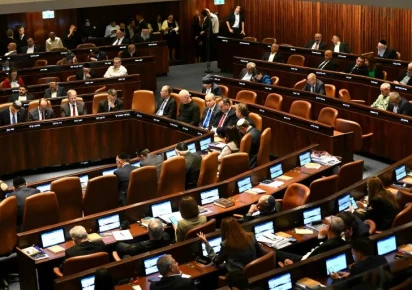

Israel’s parliament has taken the first step toward advancing controversial legislation that seeks to restrict the use of loudspeakers for the Muslim call to prayer, commonly known as the adhan.
The bill received preliminary approval in the Knesset after lawmakers voted in favour of moving the proposal forward for further consideration.
According to reports, the legislation aims to tighten regulations on the use of mosque loudspeakers and would impose restrictions on broadcasting the call to prayer through external sound systems.
Supporters of the measure argue that it is intended to address concerns over noise levels in residential areas and improve enforcement of existing regulations related to public sound systems.
The proposal was introduced by members of right-wing political parties and received support from several lawmakers in the Israeli parliament.
Under the proposed legislation, mosques could be required to obtain official permission before installing or operating loudspeaker systems for the adhan.
The bill still faces several stages of parliamentary approval and must pass additional readings before it can become law.
The move has sparked criticism from Palestinian leaders and religious representatives, who argue that the proposal infringes on religious freedom and the right to worship.
Rawhi Fattouh strongly criticised the legislation and described it as a serious violation of religious rights and freedoms.
Critics say the adhan serves an important purpose beyond its religious significance, as it informs Muslim worshippers of prayer times throughout the day and has been part of Islamic tradition for centuries.
Religious leaders and human rights advocates have expressed concerns that restrictions on the public call to prayer could affect the religious practices of Muslim communities living in Israel and occupied Palestinian territories.
The debate surrounding the legislation has renewed discussions over religious freedoms, minority rights and the balance between public regulations and faith-based practices.
Observers believe the issue is likely to remain a source of political and social debate as the bill moves through the legislative process in the coming months.
The latest development comes amid continuing regional tensions and increasing scrutiny of policies affecting religious communities in the region.