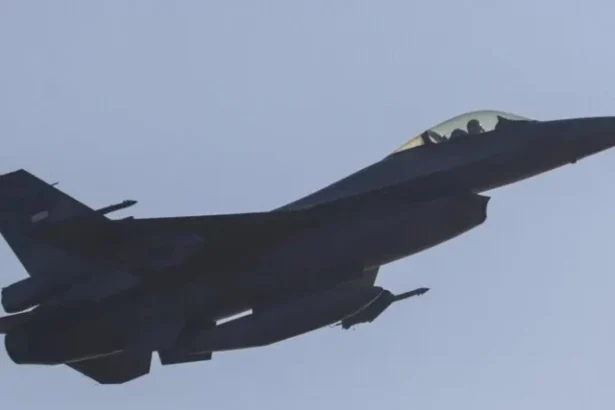

The United Kingdom, Italy and Japan have taken a major step towards strengthening their future air defence capabilities by signing a £4.6 billion ($6.1 billion) contract to advance the development of a next-generation stealth fighter aircraft under the Global Combat Air Programme (GCAP).
The agreement represents a significant milestone in the multinational defence project, which aims to deliver a sixth-generation combat aircraft expected to enter military service by 2035. The three partner nations say the programme is designed to meet evolving security challenges while equipping their air forces with cutting-edge technology for future operations.
According to the British government, the new aircraft will become a key element of the Royal Air Force’s future combat capabilities. Once operational, the fighter jet will work alongside existing aircraft, including the Eurofighter Typhoon and the F-35, while also integrating with advanced autonomous systems to create a more connected and capable air combat force.
Officials said the project will make extensive use of digital engineering techniques, artificial intelligence and other advanced technologies to produce one of the most sophisticated fighter aircraft ever developed. The aircraft is expected to feature improved stealth characteristics, enhanced situational awareness, superior data-sharing capabilities and greater operational flexibility compared to current-generation combat jets.
The latest contract has been awarded to Edgewing, a joint venture established in 2025 to oversee the programme’s industrial development. The company brings together leading aerospace organisations from all three participating countries, including Britain’s BAE Systems, Italy’s Leonardo and Japan Aircraft Industrial Enhancement Co. Ltd. (JAIEC).
The funding provided through the agreement will support the next stage of the programme, focusing primarily on the aircraft’s detailed design and engineering. This phase will involve defining the fighter jet’s core technical requirements, refining its overall architecture and carrying out extensive testing to ensure it meets operational and performance standards before production begins.
The GCAP initiative reflects increasing defence cooperation between the United Kingdom, Italy and Japan as they work together to develop advanced military technologies while sharing expertise, resources and development costs. By combining their industrial capabilities, the three countries hope to accelerate innovation and reduce the financial burden associated with designing a highly advanced combat aircraft independently.
The sixth-generation fighter is expected to incorporate a wide range of next-generation capabilities, including artificial intelligence-assisted decision-making, enhanced sensor integration, secure communications and improved interoperability with both manned and unmanned military systems. These features are intended to provide pilots with greater awareness of the battlefield while improving mission effectiveness in increasingly complex combat environments.
In addition to strengthening national defence capabilities, the programme is expected to support thousands of highly skilled jobs across the aerospace and defence industries in all three partner nations. Officials believe the long-term project will encourage technological innovation, strengthen industrial cooperation and generate economic benefits through research, manufacturing and exports.
The Global Combat Air Programme has become one of the world’s most ambitious military aviation initiatives, reflecting the growing importance of international collaboration in developing future defence technologies. With the signing of the latest £4.6 billion contract, the partner nations have moved another step closer to delivering a next-generation fighter aircraft that is expected to play a central role in their air forces for decades after its planned introduction in 2035.