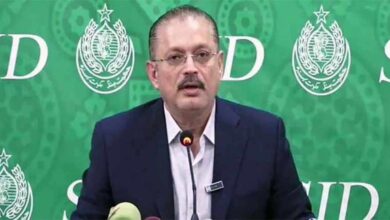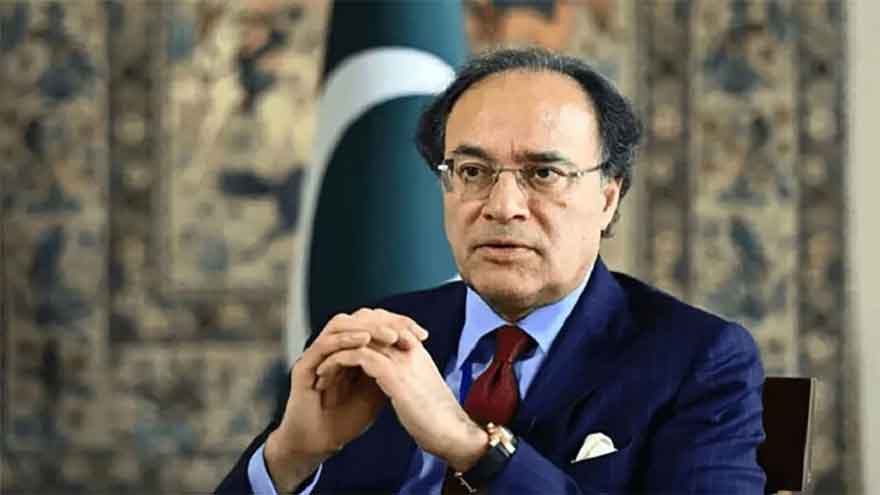

Federal Minister for Finance and Revenue Senator Mohammad Aurangzeb on Tuesday said that Pakistan’s economy is moving in the right direction and the effective economic policies of the current government are bringing positive results.
Addressing the Pakistan Banking Summit 2026 in Karachi, Senator Aurangzeb said that various measures were adopted to promote economic activity and build a documented economy.
The Finance Minister stated that the budget includes reductions in advance tax, subsidies, and super tax, while the super tax has been completely abolished for businesses with a turnover of up to Rs500 million.
Additionally, the tax rate on agricultural machinery has been reduced to zero, and the conditions for providing easy loans to farmers have been relaxed.
Aurangzeb stated that the tax burden on the salaried class has been reduced, and it is a welcome development that retailers are also willing to join the tax net.
He stated that the powers of income tax officers have been curtailed to facilitate the business community, while significant measures have also been taken to promote digitalization and modern technology. He added that in a country with a population of 250 million, it is imperative to simplify the tax system alongside expanding the tax net.
Aurangzeb stated that the government has reduced the prices of petroleum products to provide relief to the public, while there are clear signs of improvement in the country’s GDP growth rate.
He clarified that announcing the policy rate falls within the purview of the State Bank Governor, and noted that Roshan Digital Accounts have seen an additional inflow of $300 million over the past three years — a testament to the confidence of overseas Pakistanis.
He further stated that a special task force is being established to promote Small and Medium Enterprises (SMEs). The government, the Governor of the State Bank, representatives of the banking sector, and relevant institutions will work together to ensure the provision of financial facilities and easy loans to SMEs, thereby enabling the small business sector—alongside large enterprises—to play an effective role in the national economy.