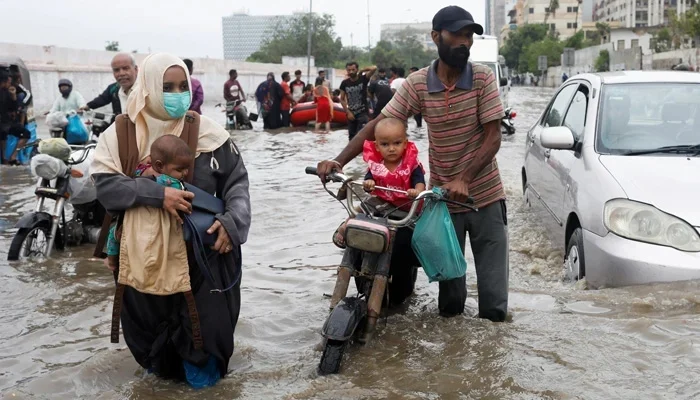

Two recent developments should force Pakistan to rethink its approach to infrastructure and governance. First, the EIU’s Global Liveability Index 2026 placed Karachi among the least liveable cities in the world (170th out of 173).
Second, a recent World Bank report on fiscal federalism highlighted a persistent failure: provinces have not meaningfully devolved power and resources to local governments under the NFC framework. These two issues are not separate. They are deeply connected. Cities become unliveable when local governments lack authority, capacity and funding.
Pakistan often frames infrastructure around mega projects like motorways, dams and ports. These projects matter. But for most citizens, the quality of the state is not experienced through a mega project. It is experienced through everyday services like water supply, drainage, roads, waste collection and basic maintenance. In other words, infrastructure is experienced locally.
This is why Pakistan cannot build a modern infrastructure state without strong local governments. We can have the best consultants, the smartest technocrats, the most ambitious federal plans and the most generous provincial budgets, but if local institutions remain weak, most infrastructure will continue to underperform. A road, drain or water scheme is only successful if it still works years later.
That requires local ownership, because local bodies are responsible for the day-to-day functioning of municipal systems. They manage operations, respond to breakdowns, maintain assets, handle citizen complaints, coordinate repairs, and ensure that services like water supply, drainage, waste collection and street maintenance continue to function reliably long after a project is completed.
There is a tendency in Pakistan to believe that if only we had the right technocrats, everything would improve. Technocrats matter, but they cannot replace local government. Infrastructure is not only a technical product. It is a long-term service relationship between the state and its citizens.
A local drainage project, for example, is not just about hydraulic calculations. It requires knowing where water collects, which areas flood first, where waste blocks channels, and who will maintain the system after the monsoon. A design engineer can model flows; a contractor can build the drain. But it is the municipality that understands these ground realities and must ultimately manage the system once it is in place.
When these systems are managed locally, they also create something less visible but equally important: a sense of ownership within communities. When people know their local representatives are responsible for everyday problems, they feel a direct stake in public services. Discussions about drainage, water supply or waste collection are no longer abstract complaints about the state; they become concrete conversations about who is responsible and who can be held accountable.
This has long-term effects that go beyond immediate service delivery. Children growing up in these communities hear their parents talk about which councillor or local representative they will vote for because that person addressed a water issue or improved drainage in their area. They observe how problems are identified, debated and resolved. Over time, this shapes their expectations of governance. They grow up seeing systems that function, even if imperfectly, and carry into adulthood a sense of responsibility to maintain and improve them.
That is why mature infrastructure systems do not rely only on centralised decision-making. They build capable local institutions, with federal and provincial governments playing supporting roles.
The federal government could, for example, introduce a national water quality policy that sets clear standards and encourages the adoption of modern treatment technologies. Under this policy, it could remove customs duties on advanced water treatment equipment, offer tax exemptions, and provide targeted subsidies to provincial programs that adopt these technologies.
Provincial governments, in turn, could design programmes that use these incentives to support local bodies directly. For instance, a province could launch a scheme that funds municipalities to install modern treatment plants, provides technical training to local staff, and sets up monitoring systems to ensure compliance with national standards.
Within this framework, local governments would play the central role in making these water treatment initiatives work on the ground. They would identify community needs, plan and manage the installation of treatment plants, engage citizens on water usage and quality, operate and maintain the systems, respond to complaints, maintain records, and collect feedback. Their direct accountability to residents ensures that the infrastructure funded and guided by higher levels of government delivers safe, reliable water every day.
Pakistan does not need to choose between experts and elected local governments. It needs both. Experts should support the system; local governments should own and run it.
For this to happen, local bodies cannot be ceremonial. They need predictable funding, technical staff, legal authority, data systems, procurement capacity and accountability mechanisms. These roles – such as municipal engineering, urban planning, water and sanitation management, financial oversight, environmental regulation and community engagement – should not be occasional luxuries. They should be part of the basic machinery of local government.
Strong local government builds trust by making the state visible through responsive services and accountability. This is especially vital in overlooked areas, where involving citizens in shaping infrastructure fosters ownership, care, sustainability and a stronger sense of belonging.
If Pakistan wants better infrastructure, it must stop treating local government as an afterthought. The country needs major national projects, but it also needs thousands of functioning municipal systems. It needs policy from the centre, support from the provinces and delivery at the local level. It needs consultants and contractors, but it also needs local institutions that can absorb, operate and improve what is built.
Ultimately, infrastructure succeeds when it reliably serves people – and communities must have the authority, resources and capacity to sustain it.