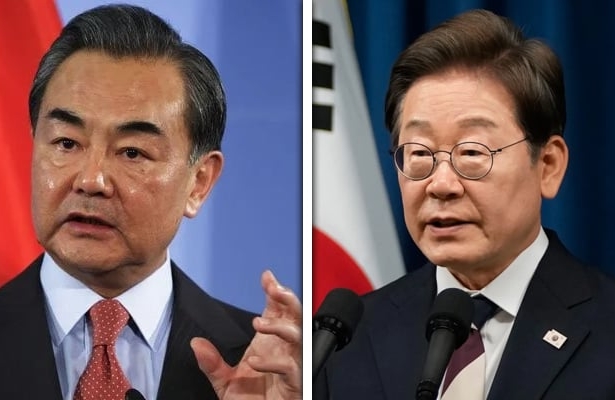

SEOUL: Chinese Foreign Minister Wang Yi has urged South Korea to adopt a practical and positive approach towards China, saying stronger bilateral ties would serve Seoul’s interests amid growing geopolitical tensions in the region.
Wang made the remarks during a meeting with South Korean President Lee Jae Myung, where the two sides discussed bilateral relations, trade and the wider security situation in East Asia.
According to Chinese officials, Wang stressed that South Korea should avoid taking sides in growing confrontation between major powers and instead pursue balanced relations with both China and the United States.
“Adopting a positive and practical policy towards China is in South Korea’s interest,” Wang said, while calling for greater cooperation between the two neighbouring economies.
The Chinese foreign minister also urged both countries to accelerate negotiations on the second phase of their free trade agreement, signalling Beijing’s interest in strengthening economic ties at a time when global trade remains under pressure.
Wang said Beijing hoped Seoul would not become involved in confrontation between competing blocs or align itself completely with any single side.
Instead, he encouraged South Korea to maintain constructive relations with both China and the United States.
The comments reflect the delicate diplomatic position facing Seoul. South Korea is a key US ally and relies heavily on Washington for security, particularly because of the continuing threat posed by North Korea. At the same time, China remains one of South Korea’s most important economic partners.
Beijing has repeatedly called for South Korea to avoid policies that could damage bilateral economic and diplomatic relations.
The two countries have extensive trade links, with Chinese and South Korean companies deeply connected through manufacturing, technology, electronics and supply chains.
Wang also addressed tensions on the Korean Peninsula, arguing that the fundamental solution to reducing confrontation would require Washington to abandon what Beijing describes as hostile policies towards North Korea.
China has traditionally advocated dialogue and negotiations to resolve tensions surrounding North Korea’s nuclear and missile programmes.
South Korea, meanwhile, has sought to strengthen its security partnership with the United States while exploring opportunities to improve relations with neighbouring countries.
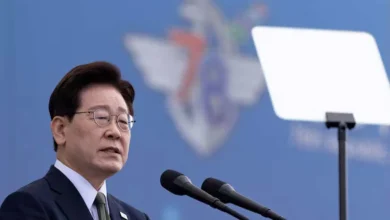
During the meeting, President Lee said China and South Korea should work as partners based on mutual interests and cooperation.
His remarks suggested that Seoul wants to maintain stable relations with Beijing despite its close security relationship with Washington.
The meeting comes as geopolitical competition between China and the United States continues to influence countries across Asia. Trade disputes, technology restrictions, military alliances and tensions over Taiwan and the Korean Peninsula have placed regional governments under increasing pressure to balance competing interests.
For South Korea, maintaining that balance is particularly challenging. Its economy depends heavily on international trade, while its national security remains closely linked to its alliance with the United States.
China, meanwhile, sees closer relations with Seoul as important for regional stability and for preventing the further expansion of US-led strategic partnerships in East Asia.
The latest meeting therefore carries significance beyond bilateral ties. It highlights Beijing’s push for stronger economic cooperation with Seoul while urging South Korea to maintain an independent diplomatic approach.
Whether the two sides can translate the latest diplomatic engagement into progress on trade and regional security will depend on their ability to manage disagreements while preserving areas of mutual interest.
For now, both governments appear to be signalling a preference for dialogue, economic cooperation and a more stable relationship despite the increasingly complicated geopolitical environment surrounding them.