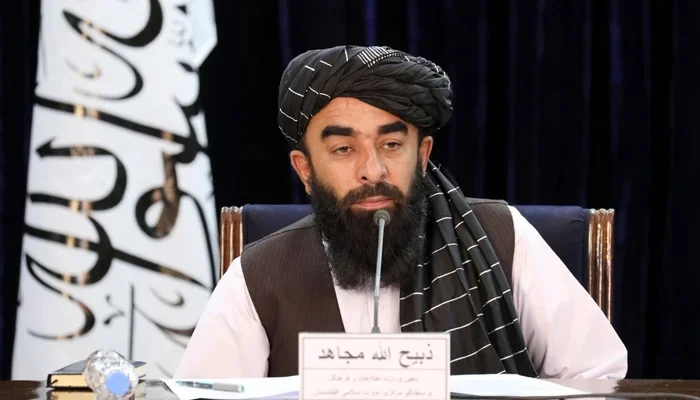

Taliban regime’s spokesperson Zabihullah Mujahid said that Afghanistan wants to continue dialogue and cooperation with Pakistan, expressing hope that outstanding issues between the two neighbouring countries can be resolved.
In an interview with Al Arabiya, Mujahid said Afghanistan welcomed efforts by Saudi Arabia and other countries to help resolve differences between Islamabad and Kabul.
“Saudi Arabia can play a positive role in this matter,” he said.
He said Kabul hoped these efforts would contribute to finding a way forward on the issues between the two sides.
Mujahid said the Afghan people held Saudi Arabia and the two Holy Mosques in high regard, reflecting the strong respect and affection for the kingdom among Afghans.
He reiterated Kabul’s willingness to maintain engagement with Pakistan and said Afghanistan respected Saudi Arabia’s decisions regarding its efforts to facilitate dialogue between the two countries.
Pakistan seeks end to Afghan interference
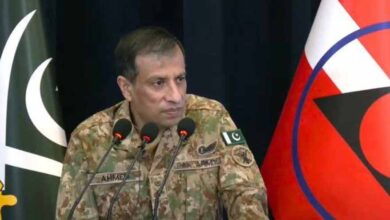
Mujahid’s remarks came days after Inter-Services Public Relations Director-General Lt Gen Ahmed Sharif Chaudhry told Al Arabiya that Pakistan wanted an end to terrorism and interference from Afghanistan.
He said the Afghan Taliban regime was allowing its territory to be used for the recruitment, training, arming and launching of terrorist attacks against Pakistan and elsewhere in the region.
Referring to a recent United Nations report, the ISPR DG said dozens of terrorist groups were operating from Afghanistan. “Afghanistan should not become the terrorist centre of the world,” he said.
He warned that Afghanistan should not become “the terrorist centre of the world”.
The military spokesperson said Pakistan reserved its right to self-defence under Article 51 of the United Nations Charter and would continue taking necessary measures to protect the lives, honour and property of its citizens.
The ISPR chief said Pakistan would also continue its counter-terrorism efforts, which have been ongoing for the past two decades.
Cross-border militancy
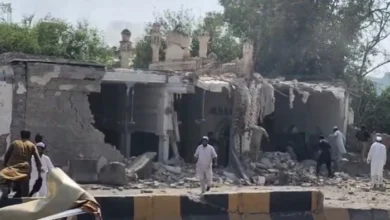
Pakistan has witnessed a sharp rise in cross-border terrorist incidents, particularly in Khyber Pakhtunkhwa and Balochistan, since the Afghan Taliban returned to power in 2021.
Islamabad has repeatedly urged Kabul to prevent its territory from being used by militant organisations to carry out attacks inside Pakistan. Pakistan maintains that the Afghan Taliban authorities have failed to take effective action against groups responsible for attacks on Pakistani security forces and civilians, a position Kabul has disputed.
Pakistan launched Operation Ghazab lil-Haq in February 2026, months after the two countries agreed to a ceasefire in October 2025 following clashes along several border points.
Despite multiple rounds of talks, Islamabad and Kabul have yet to resolve their differences, with the issue of militant groups operating from Afghan soil remaining a major point of contention between the two sides.