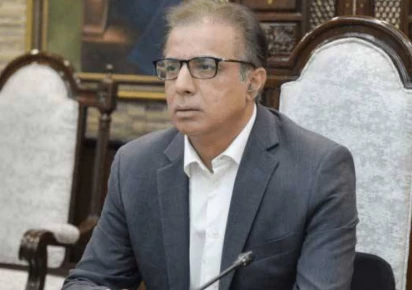

The government’s latest austerity measures are expected to generate savings of only Rs16.8 billion, while Pakistan’s overall implementation of the International Monetary Fund (IMF) programme remains strong, Finance Secretary Imdad Ullah Bosal told a National Assembly committee.
Briefing the National Assembly Standing Committee on Finance, Bosal said the government would save around Rs700 million by cutting fuel allocations for official vehicles by 50% for three months. Another Rs16.1 billion is expected to be saved through a 5% reduction in non-salary expenditures for one year.
The austerity measures were introduced by Prime Minister Shehbaz Sharif as the government faced criticism over rising costs linked to the Middle East conflict. The country is also expected to collect around Rs139 billion every month through the petroleum levy.
Bosal, who is also Pakistan’s chief negotiator with the IMF, said the government had maintained a strong level of compliance with the programme. He said this had helped Pakistan reach staff-level agreements with the lender without major difficulties in previous reviews.
However, several IMF conditions remain incomplete or have faced delays. Bosal briefed lawmakers on the implementation status of earlier reviews but did not provide the final position on the fourth review because discussions with the IMF are still continuing.
One of the delayed areas is the liberalisation of the sugar sector. Bosal said three provinces had agreed with the proposed reforms, while one province had raised reservations. Discussions are continuing to address those concerns.
Under the IMF programme, the federal and provincial governments are required to agree on a national sugar-market policy covering licensing, price controls, imports, exports and zoning. The policy was supposed to be approved by June, but the government has yet to complete the process.
The Finance Ministry said work was continuing on a framework for the full liberalisation of the sugar sector. Draft recommendations have also been shared with provincial governments.
The implementation of agricultural income tax reforms has also remained slow. The IMF has asked Pakistan to improve tax collection from agricultural income. Bosal said discussions were being held with the provinces to address the issue.
The committee also discussed the government’s failure to meet targets for health and education spending. Against a combined target of Rs3.47 trillion during the previous fiscal year, the five governments spent around Rs3.1 trillion.
Bosal said shortfalls in federal tax collection had also created pressure on the provinces to reduce their expenditures.
Another pending condition relates to Pakistan’s Sovereign Wealth Fund. The government was required to amend the relevant law to strengthen governance and introduce safeguards in line with international standards.
Officials said proposed changes would also alter the mechanism for handling dividends received by the fund. Under the existing framework, the fund can retain 50% of dividends from companies, while the proposed arrangement would first transfer the income to the government.
Several state-owned enterprises also remain outside full compliance with the State-Owned Enterprises Act. The government plans amendments concerning entities including Port Qasim Authority, Gwadar Port Authority, Karachi Port Trust, State Life Insurance Corporation, National Telecommunication Corporation and Pakistan Railways.
Officials said some of the required amendments had already been approved, while others were moving through the legislative process.
The IMF programme also includes measures to strengthen Pakistan’s anti-corruption framework. Bosal said Prime Minister Shehbaz Sharif had assigned the law minister and the National Accountability Bureau to prepare an action plan targeting corruption risks in 10 government departments.
The move drew concerns from committee members over the possible expansion of NAB’s role.
Meanwhile, amendments to corporate laws required under the IMF programme are also pending. Bosal said around 114 amendments were proposed to strengthen compliance requirements for unlisted companies and improve corporate governance.