
LAHORE: Breast cancer is the most common disease in women in 164 countries of the world. An estimated 2.4 million women were diagnosed with breast cancer and 694,000 women died globally from the disease in 2024.
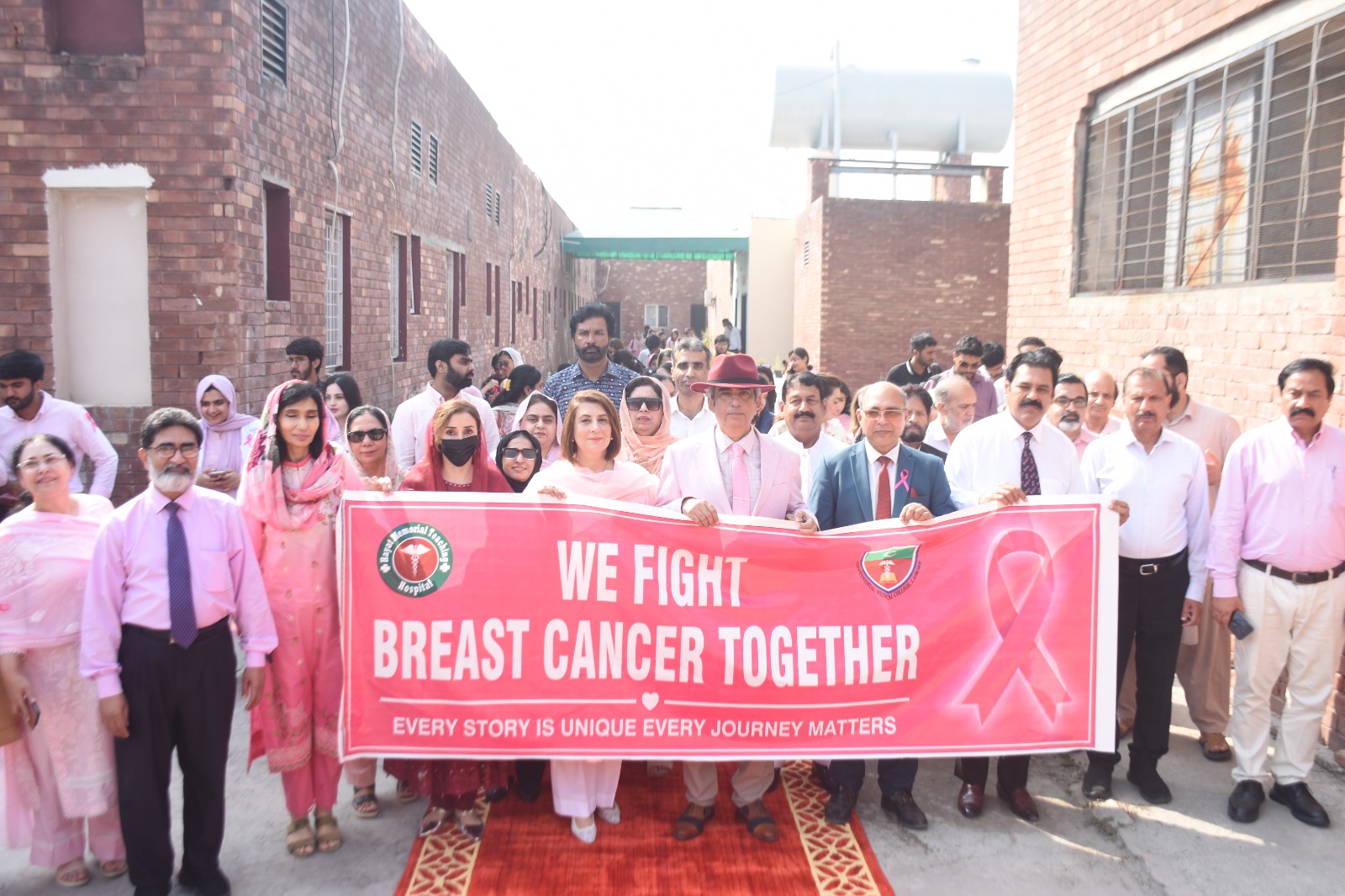
Approximately, 80% of breast cancer occurs in women with no specific risk factors other than sex and age. Everyone should have an equal chance to survive breast cancer. These views were expressed by Prof Dr Al-Fareed Zafar, while addressing “National Seminar” on world breast cancer awareness day, held under the auspices of Continental Medical College in collaboration with General Cadre Doctors Association, at Hayat Memorial Hospital Lahore.
Prof Al-Fareed Zafar added that Breast Cancer Awareness day is a global opportunity to raise awareness of breast cancer and calls for action to improve access to timely diagnosis and quality care. The theme “Every story is unique, every journey matters” recognizes that every experience of breast cancer is different. Behind every diagnosis is a person, a family and a unique journey. Every person affected by breast cancer deserves to be, supported and treated with dignity.
Breast cancer can affect women after reaching the age of puberty, with incidence increasing later in life. Access to early diagnosis and effective treatment can vary significantly, contributing to large differences in survival rates among different countries. All countries should aim at reducing breast cancer mortality by 2.5% per year, bringing the world on track to avert 2.5 million breast cancer deaths by 2040.
This is feasible by providing breast cancer services as part of the essential benefit package for universal health coverage and making them available in public facilities.
Addressing the National seminar, General Cadre Doctors Association, President, Dr Masood Sheikh said that effective intervention for early and timely diagnosis linked to comprehensive treatment, rehabilitation and palliative care are essential to reduce the burden of breast cancer and achieve and maintain optimal functioning and well-being.
He stressed that certain factors increase the risk of breast cancer including increasing age, obesity, harmful use of alcohol, family history of breast cancer, history of radiation exposure, reproductive history (such as age that menstrual periods begin and age at first pregnancy), tobacco use and postmenopausal hormone therapy. Family history of breast cancer increases the risk of breast cancer, but most women diagnosed with breast cancer do not have a known family history of the disease.
Certain inherited high penetrance genes mutations greatly increase breast cancer risk, the most dominant being mutations in the genes BRCA1, BRCA2 and PALB-2. The WHO Global Breast Cancer Initiative (GBCI) aims at achieving three targets: 60% of invasive breast cancers are diagnosed at stage I or II, 60 days from the first detection or presentation of symptoms at health facility to get a diagnosis, 80% of people diagnosed with breast cancer should receive the recommended complete treatment.
Continental Medical College Principal and renowned breast surgeon Prof Dr Ayesha Shaukat said that women of all ages should be aware of changes in the breasts and seek medical advice if something seems unusual. Signs can include a breast lump or thickening, changes in the size or shape of the breast, changes in the skin or nipple, or abnormal or bloody fluid discharge from the nipple.
For women in age groups where mammography screening is recommended, a mammogram may be recommended in health care settings with adequate screening services. Symptoms of breast cancer can include a dimpling, redness, pitting or other changes in the skin, change in nipple appearance or the skin surrounding the nipple (areola). Most breast lumps are not cancer. Breast lumps that are cancerous are more likely to be successfully treated when they are small and have not spread to nearby lymph nodes. Breast cancers may spread to other areas of the body and trigger other symptoms.
Often, the most common first detectable site of spread is the lymph nodes under the arm. Screening is done through the mammography in an apparently healthy population, usually in women from 50-69 years of age. Early access to a multidisciplinary team that includes oncologists, radiologists, pathologists, dieticians/nutritionists, physical therapists, social workers, mental health, palliative care and rehabilitation teams both during and after completion of treatment helps improve outcomes.
Ex Director General Health Punjab Dr Zahid Pervaiz said that major inequalities in breast cancer survival persist around the world. 41% of women in low-income countries are expected to survive at least five years after a breast cancer diagnosis, compared with 87% in high-income countries. Around 70% of breast cancer deaths occur in low and middle-income countries, where access to early detection, timely diagnosis and comprehensive treatment remains more limited.