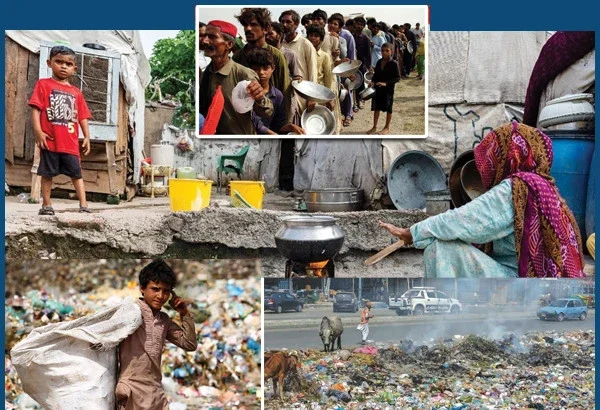

The government has sought to clarify a recent World Bank assessment showing that Pakistan accounts for nearly half of the people living in extreme poverty across its newly defined Middle East, North Africa, Afghanistan and Pakistan (MENAAP) region.
Adviser to Finance Minister Muhammad Aurangzeb, Khurram Schehzad, said the figure should be understood in the context of the World Bank’s revised statistical grouping. He said Pakistan’s inclusion in the MENAAP reporting region was an administrative and statistical change rather than a shift in the country’s geographical or economic identity.
Schehzad said the reclassification did not change Pakistan’s status as a South Asian country or its income classification. He cautioned against interpreting the new regional figures as evidence that poverty had suddenly moved from other countries to Pakistan.
The World Bank’s latest MENAAP economic update said Pakistan accounted for about 48 per cent of people in the region living on less than $3 a day in 2024. It also reported that Pakistan’s poverty rate increased by 6.4 percentage points between 2018-19 and 2024-25.
Schehzad said Pakistan’s large population, compared with many countries in the Middle East and North Africa, naturally has a significant impact on regional aggregates. He argued that absolute numbers should therefore be viewed alongside population size when assessing the distribution of poverty across the newly defined region.
He said the appropriate interpretation was that Pakistan had been included in the World Bank’s MENAAP reporting framework, and that regional classifications should not be confused with geographical boundaries, economic development levels or national identity.
The World Bank, however, said MENAAP was the only region where extreme poverty remained above pre-pandemic levels and continued to increase. According to its assessment, Pakistan accounted for a substantial part of the deterioration in the region.
The report estimated that 14.3 per cent of MENAAP’s population was living on less than $3 a day in 2024, compared with a global rate of 10.4 per cent.
The World Bank attributed the increase in Pakistan’s poverty rate to a combination of economic and environmental shocks. These included the Covid-19 pandemic, the devastating floods of 2022, high inflation, currency depreciation and a prolonged period of economic adjustment.
The lender said these pressures weakened household purchasing power, real incomes and employment opportunities, contributing to the rise in poverty.