


ISLAMABAD: Deputy Prime Minister and Foreign Minister Ishaq Dar has criticised past decisions that allowed militants to return to the country, describing the release of terrorists after a meeting over tea in Kabul as a major mistake.
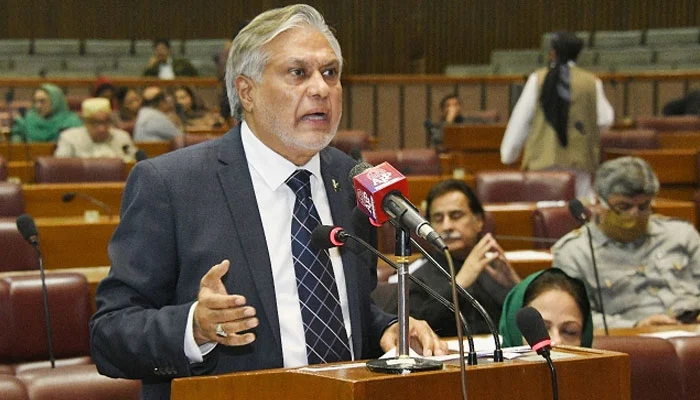
Addressing a joint session of Parliament on Thursday, he raised questions about the resurgence of terrorism, the return of fighters belonging to the banned Tehreek-e-Taliban Pakistan (TTP), and the decisions that he said had contributed to renewed insecurity.
Dar called for accountability over the decisions to reopen the border to TTP fighters and release militants, arguing that the consequences had been borne by the entire nation. He questioned who had authorised the return of the fighters and why individuals accused of terrorism had been allowed to regain their freedom.
The foreign minister said reopening the border and permitting TTP fighters to return to Pakistan had been mistakes. Referring to the release of militants after the Kabul meeting, he questioned the rationale behind the decision and asked who had approved their freedom.
He said the return of escaped TTP militants had been followed by renewed unrest and terrorist activity across Pakistan. Those responsible for the decisions, he added, should accept responsibility for the resurgence of violence and the resulting security challenges.
Dar also questioned which government had released militants held in prisons and who had enabled them to resume their activities. He argued that errors in earlier policy decisions had helped terrorism regain ground, leaving the country to bear the consequences.
The deputy prime minister’s remarks came as lawmakers considered the renewed threat posed by militant groups and the need for a response that goes beyond political negotiations. He said the situation had moved beyond the stage at which political reconciliation alone could address the problem.
Counterterrorism campaign
Recalling Pakistan’s earlier campaign against terrorism, Dar referred to the response following the Army Public School (APS) attack, after which an All Parties Conference (APC) was convened and the National Action Plan was developed.
He also cited Operation Zarb-e-Azb, saying the military campaign forced militants to leave affected areas. Security forces subsequently pursued terrorist groups across the country as part of wider efforts to eliminate the threat.
Dar questioned why decisions taken after those operations had allowed militants to return and become active again. He maintained that the country had paid a heavy price for the mistakes and that those responsible for the decisions needed to be held accountable.
His remarks highlighted concerns over the reversal of gains made during earlier counterterrorism operations, particularly in light of the renewed activity attributed to the banned TTP.
Call for action
Dar said the threat of terrorism could no longer be treated as an issue that could be resolved solely through political accommodation. He urged the authorities to take effective measures, warning that failure to act decisively would raise questions about when the country intended to confront the problem.
He stressed that a firm strategy was necessary to safeguard national security and protect the public. His address focused on identifying responsibility for past decisions, preventing militants from regaining a foothold and ensuring that Pakistan did not repeat what he described as costly mistakes.