


LAHORE: Pakistan is considering liberalising its dairy market and removing milk from the list of essential commodities as part of proposed reforms aimed at attracting investment and increasing annual dairy exports to $2 billion by 2035.
The proposals are outlined in a policy framework titled Attracting Investment to Enhance Pakistan’s Dairy Exports, prepared by the Planning Commission, the Ministry of National Food Security and Research, the Food and Agriculture Organization (FAO) and industry stakeholders under the URAAN Pakistan initiative.
Pakistan produces about 72 billion litres of milk a year, equivalent to around seven percent of global production, but exports relatively small quantities. The policy framework says the country recorded a dairy trade deficit of $37 million in 2024.
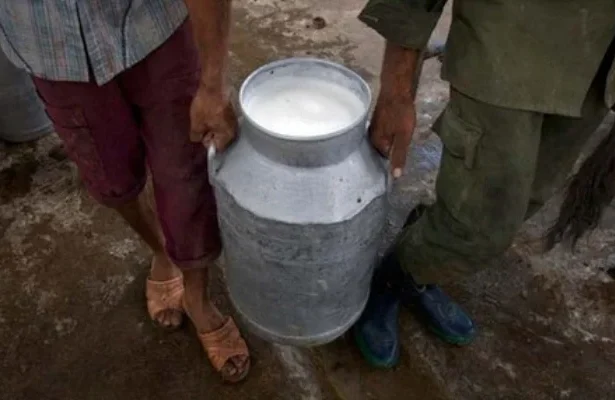
Most milk is sold through informal channels, including traditional vendors, while only about five percent is processed formally, according to the supplied report.
The framework sets a target of $500 million in annual dairy exports by 2029-30, rising to $2 billion by 2035. It proposes that the private sector play the leading role in expanding investment, processing and exports.
Among the proposed incentives, the government could reduce the general sales tax on value-added dairy products from 18 percent to five percent and cut or abolish import duties on dairy machinery, genetic material and feed ingredients. Licensed dairy farms and processing units could also be offered agricultural electricity tariffs, while financial support could be provided for cold-chain infrastructure, including solar-powered milk chillers.
The proposals also call for a national digital system to monitor animal diseases and trace livestock, as well as disease-free dairy zones in Punjab and Sindh that meet standards set by the World Organisation for Animal Health. These measures are intended to improve animal health and help the sector meet export requirements.
Another priority is reducing the loss of productive female animals and young calves. The report estimates that about 1.5 million dairy animals and two million calves are lost each year, undermining the quality of the breeding stock.
Other proposals include expanding laboratories for sexed semen and embryo transfer, allowing smallholder farmers to use livestock as collateral for loans, and establishing dairy export processing zones linked to the ports of Gwadar and Karachi.
The policy identifies regional markets as potential destinations for Pakistani dairy products. It cites annual dairy imports worth $12.1 billion in China, $11.05 billion in Gulf Cooperation Council countries, $1.8 billion in Indonesia and $1.5 billion in Malaysia.
Potential export products include camel milk, flavoured yoghurt, ghee, butter, cheese and whey protein, which the framework identifies as possible value-added products for international markets.
Priority actions for the 2026-27 fiscal year include ratifying the pending National Breeding Policy and Animal Health Act, launching animal identification and traceability pilot programmes in all provinces, and restructuring the Livestock and Dairy Development Board with private-sector participation.