


Negotiations between the United States and Iran are continuing amid rising regional tensions, with Qatar warning that unchecked escalation could trigger a wider war across the Middle East.
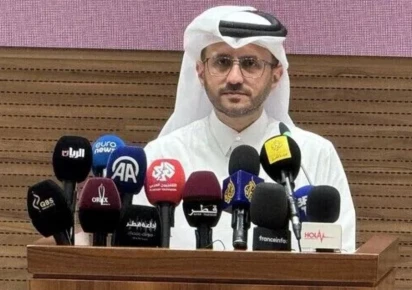
Qatari Foreign Ministry spokesperson Majed al-Ansari said on Tuesday that both sides remained engaged in discussions. Speaking at the Global Security Forum in Doha, he said Qatar was coordinating with regional partners and hoped diplomatic efforts would eventually lead to an agreement.
However, Ansari warned that the situation on the ground was becoming increasingly difficult. He said previous efforts to use a ceasefire as a stepping stone towards negotiations had failed, allowing hostilities to resume.
He stressed that ceasefires should serve as a pathway towards a lasting settlement rather than an end in themselves. He also called for simultaneous efforts to de-escalate conflicts across the region, including tensions involving Yemen.
Ansari expressed concern over political statements from Israel, warning against using regional instability for domestic political purposes. He also criticised the lack of progress towards a political settlement between Israel and the Palestinians, saying a credible partner for peace was currently absent in Israel.
He emphasised that successful mediation depended on confidence in the negotiating process rather than mutual trust between the parties.
Meanwhile, Iran warned that any American military strike would prompt a response, rejecting claims that Washington had conveyed a message expecting Tehran to refrain from retaliation.
Iranian Foreign Ministry spokesperson Esmaeil Baqaei described the suggestion that the US could attack Iran without facing a response as an illusion. He said Tehran would ensure its response was equal to or stronger than any attack.
Baqaei also denied that Iran had entered nuclear negotiations with Washington, dismissing speculation that Tehran had softened its position on the issue.
He said Iran remained committed to protecting its national interests and security while keeping diplomatic channels open. He added that Russia continued to play an important role in efforts to reduce tensions, recalling its involvement in negotiations that led to the 2015 nuclear agreement.
According to Baqaei, recent consultations with Russian officials covered bilateral relations, regional security, the Ukraine conflict, the Gulf and the Strait of Hormuz.
He said Iran would continue pursuing diplomacy wherever it offered a chance to prevent further escalation, despite its longstanding distrust of Washington.
The Iranian spokesperson also opposed an Organisation of Islamic Cooperation resolution expressing solidarity with Saudi Arabia over attacks by Yemen’s Houthi movement. He argued that the Yemen conflict required dialogue and reconciliation rather than military action.
Amid the diplomatic efforts, Chief of Defence Forces and Chief of the Army Staff Field Marshal Asim Munir arrived in Tehran on Tuesday with a delegation to meet senior Iranian officials.
Iranian media reported that the discussions would focus on Pakistan’s efforts to facilitate dialogue between Washington and Tehran, alongside broader regional developments.
Pakistan has maintained contacts with both countries as part of its mediation efforts. The diplomatic initiative follows the Islamabad Memorandum of Understanding signed by the US and Iran in June, which established a framework for negotiations towards a broader agreement.
However, subsequent talks stalled over disagreements regarding security guarantees and freedom of navigation through the Strait of Hormuz, a crucial route for global energy supplies and international trade.
Munir’s visit comes as diplomatic efforts continue to prevent further confrontation between the two countries and contain the wider regional fallout.